If you are looking for a Pokémon vending machine for sale in 2026, the first decision is not screen size, cabinet color, or even price. It is understanding exactly what you are buying. Official Pokémon automated retail machines are not currently offered for sale by their owner, while commercial trading card vending machines can be configured to sell legitimately sourced Pokémon TCG products and other sealed collectibles. From there, a serious purchase comes down to seven practical checks: product handling, capacity, payments, software, security, supplier capability, and the real deployed cost. For this comparison, I’m prioritizing the details that affect daily sales and service rather than impressive-looking specifications that may have little value after installation. A good machine should protect the merchandise, complete payments reliably, report what is happening remotely, and remain practical to refill and repair.
1. Confirm What “Pokémon Vending Machine” Actually Means
This is the most important check because two very different products are routinely described with nearly identical language.
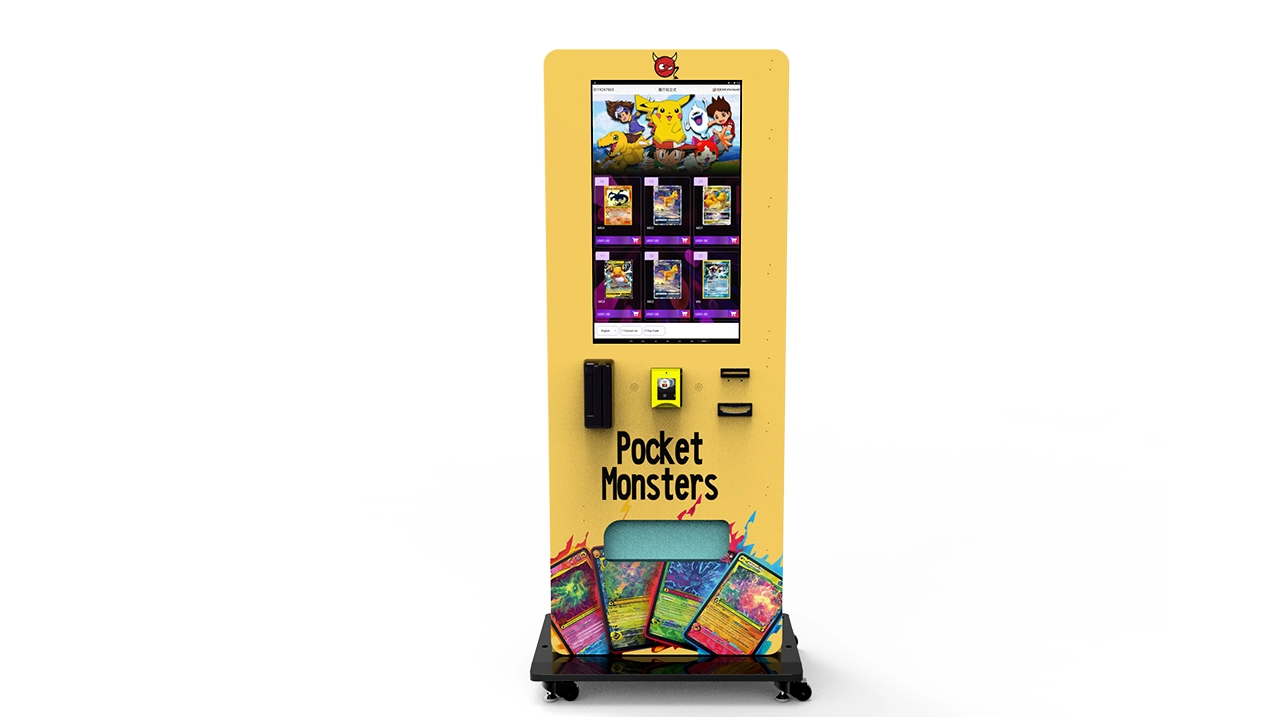
There are official Pokémon automated retail machines operated as part of Pokémon Center’s retail program, and there are independently manufactured trading card vending machines that can dispense authentic Pokémon TCG products acquired through legitimate retail or distribution channels. Those are not the same thing.
Pokémon Center’s official automated retail FAQ, updated on January 26, 2026, states that its machines are owned and operated by The Pokémon Company International and that there are currently no plans to sell them. That means a supplier claiming to sell you an “official Pokémon vending machine” deserves immediate scrutiny unless it can demonstrate a genuine authorization that can be independently verified.
Source: Pokémon Center Support — Pokémon Automated Retail Vending Machine FAQ.
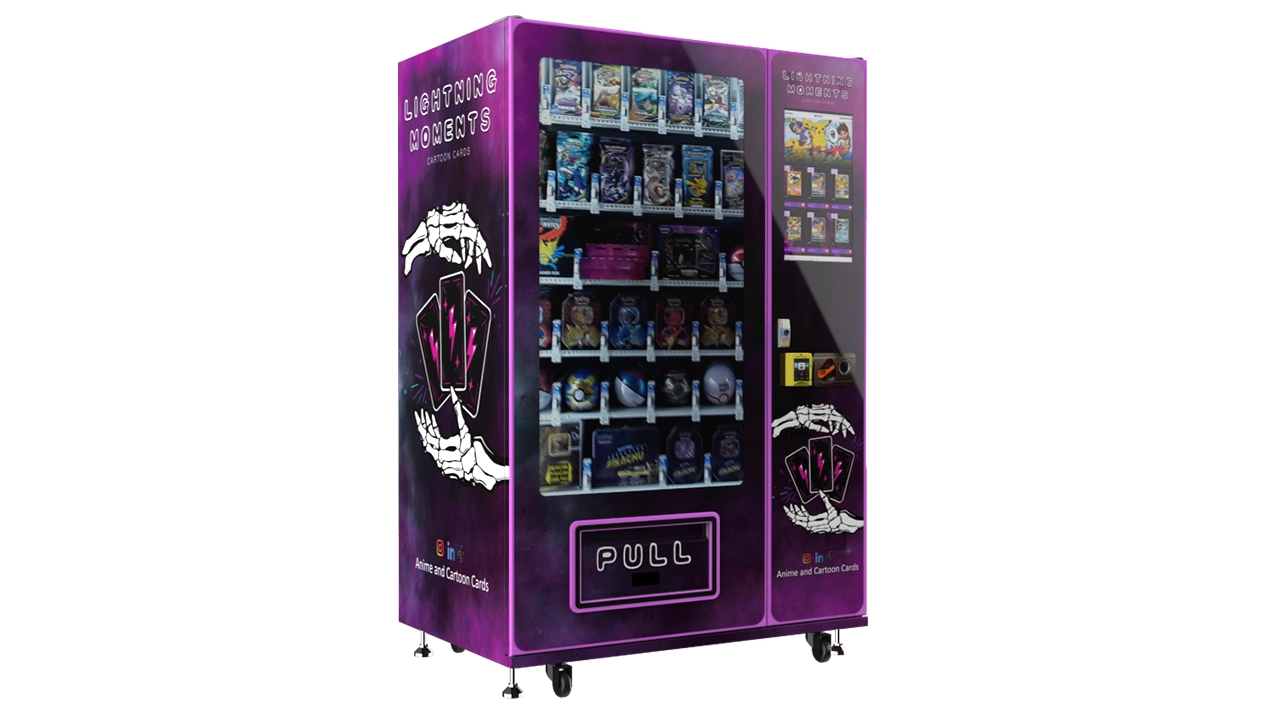
A commercially available machine is better described as a trading card vending machine configured for Pokémon TCG products. The hardware may hold booster packs, blister packs, sealed boxes, collection products, sleeves, or other merchandise, but the cabinet itself is independent retail equipment.
This distinction should influence the graphics too. Buying hardware that can dispense Pokémon products does not automatically give the machine owner or manufacturer permission to reproduce Pokémon characters, logos, packaging artwork, or other protected brand assets on the cabinet or touchscreen.
I’d recommend separating three questions before approving any order:
- Who owns the vending machine? Determine whether you are buying independent hardware or participating in a brand-operated retail program.
- Where does the inventory come from? The machine does not make questionable inventory legitimate. Products still need to come from appropriate supply channels.
- Who owns the artwork? Your ability to sell genuine sealed products does not automatically grant rights to reproduce third-party branding on the cabinet.
A responsible OEM project normally starts with the operator’s own retail brand. Product photographs, descriptive product names, and third-party trademarks should only be used in ways permitted by the applicable rights holder and relevant rules. If branded exterior graphics are requested, authorization should be confirmed before production.
What a Buyer Can Actually Purchase
The more useful question is therefore not “Can I buy the official machine?” but “Can I buy a commercial machine designed to sell sealed Pokémon TCG inventory reliably?” The answer to the second question is yes.
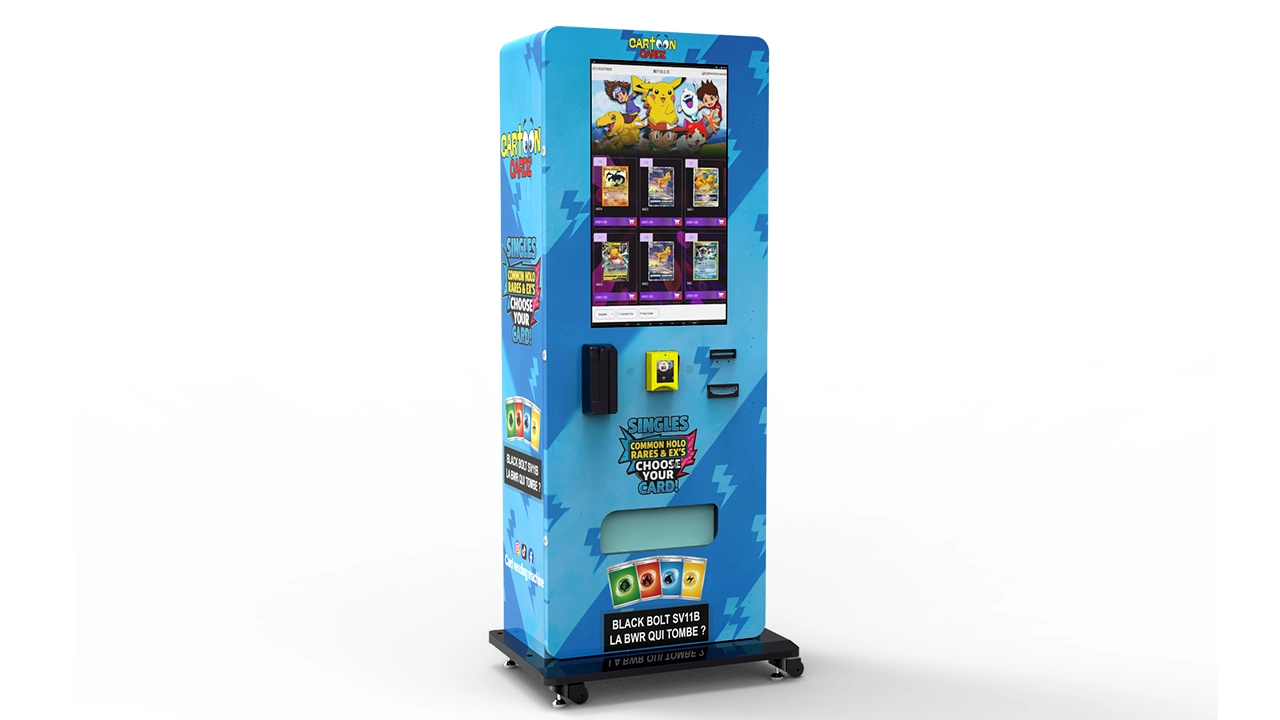
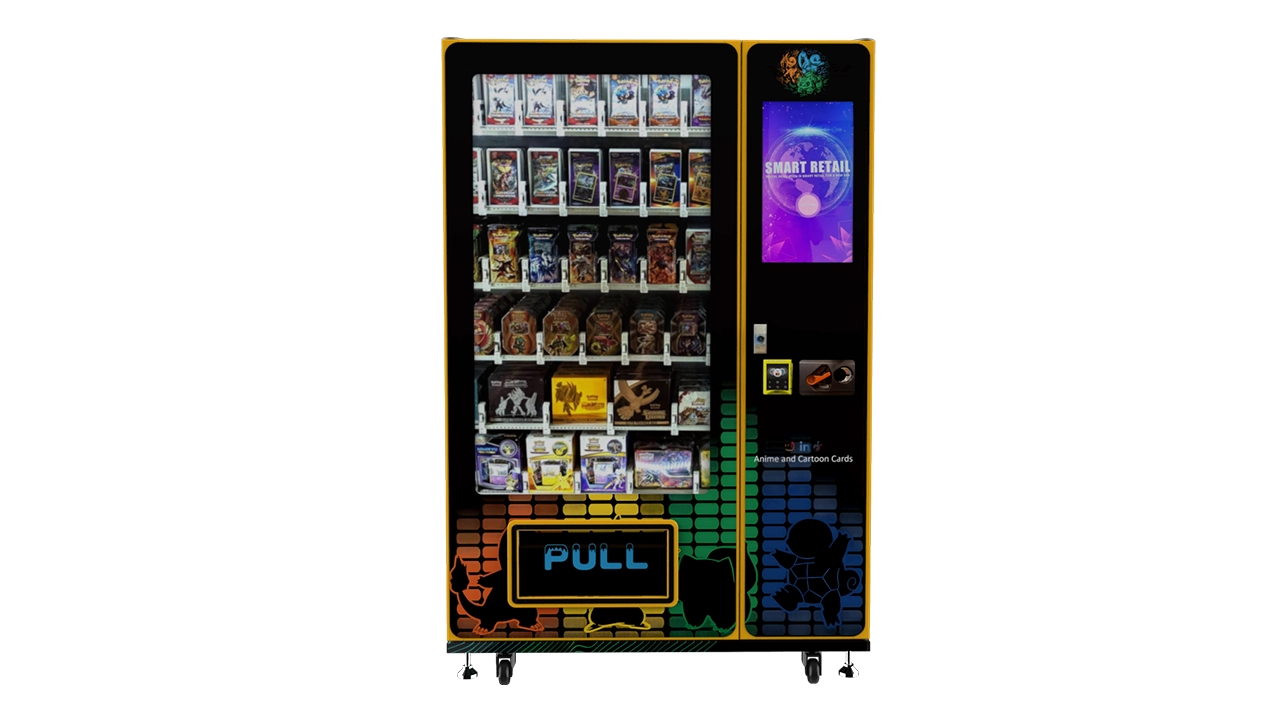
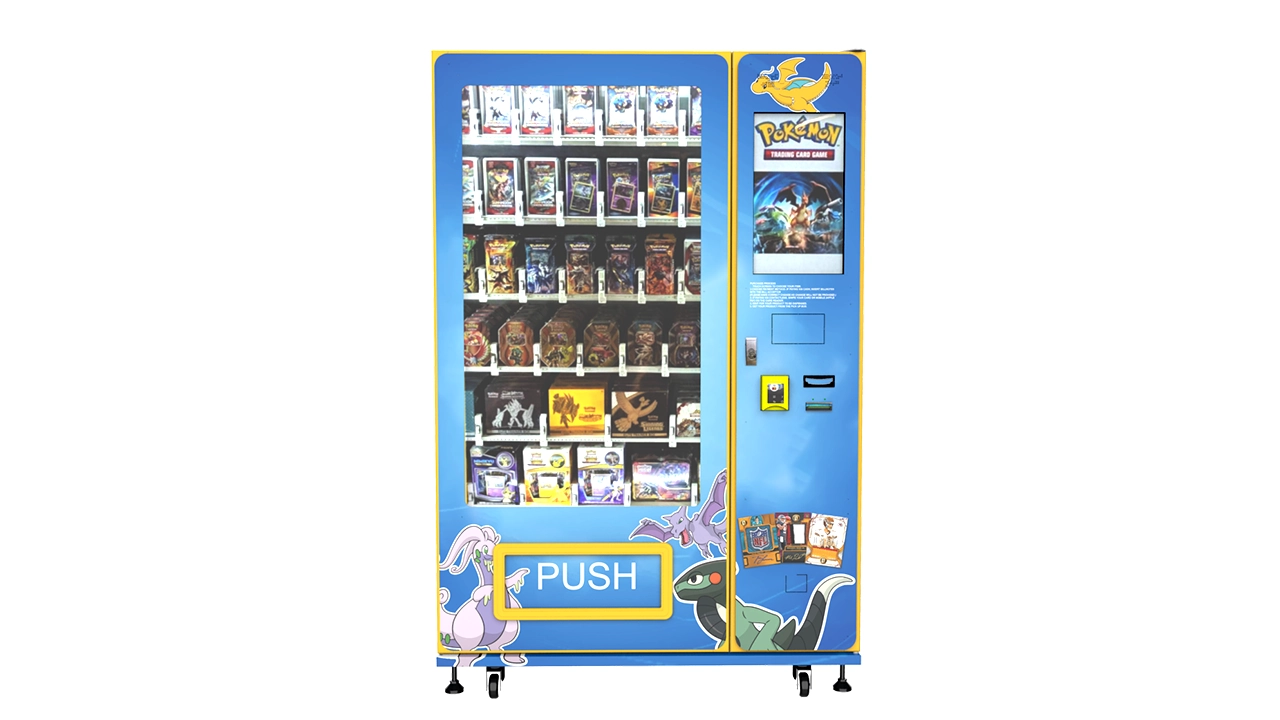
Zhongda Smart, for example, publishes a trading card vending machine configured for Pokémon TCG products. Its ZD-CX-22 reference configuration lists a 21.5-inch touchscreen, 60 cargo lanes, 4G/Wi-Fi connectivity, multiple payment options, and an approximate capacity of 300 to 1,200 pieces depending on package dimensions and lane configuration.
That kind of machine is fundamentally an adaptable self-service kiosk. The important part is not the Pokémon name on a web page. The important part is whether the machine can be configured around the exact booster packs, blisters, tins, boxes, or accessories you intend to stock.
In my view, that is a healthier way to compare any Pokémon vending machine for sale. Start with the merchandise and operating requirements, then work backward into the hardware.
Do Not Pay a Premium Just for Character Graphics
A dramatic wrap can make a machine look valuable while hiding an ordinary internal configuration. The reverse can also be true: a plain prototype cabinet may contain a far better payment system, delivery mechanism, and remote-management platform.
When reviewing proposals, strip the cosmetic elements out of the comparison. Ask for the machine configuration without promotional graphics and examine:
- cargo-lane type and dimensions;
- minimum and maximum supported product dimensions;
- maximum supported product weight per lane;
- delivery method;
- vend detection;
- payment terminal model;
- network options;
- remote-management functions;
- cabinet construction;
- spare-parts availability;
- warranty terms;
- software or platform fees.
Those items determine whether the machine still earns money after the excitement of a new installation wears off.
2. Check the Dispensing System Against Real Card Products
A trading card machine does not sell “cards” in the mechanical sense. It sells packages with very different dimensions, surfaces, weights, centers of gravity, and levels of crush resistance.
A thin booster pack behaves differently from a cardboard blister. A premium collection box behaves differently from a compact deck box. A sealed display box behaves differently from a small accessory package. Treating all of them as interchangeable is one of the easiest ways to create jams and damaged merchandise.
I’d rank product handling above touchscreen size when comparing a Pokémon vending machine for sale. Customers will tolerate a smaller display. They will not be pleased when a premium box lands on a corner, a booster pack catches inside a coil, or the machine charges them without delivering the product.
Compare the Main Delivery Methods
| Delivery Method | Best Fit | Main Advantage | Main Concern | What to Test |
|---|---|---|---|---|
| Spring coil | Standard packs, blisters, compact boxed products | Flexible layout and straightforward service | Poor coil pitch can twist, pinch, or double-feed packages | Package width, coil diameter, pitch, product friction, final rotation position |
| Pusher or track | Uniform packages and products that benefit from controlled front feeding | Orderly presentation and repeatable movement | Requires accurate sizing and friction control | Full lane, half-full lane, nearly empty lane, warped packaging |
| Belt system | Products that do not behave well in coils | Broad packaging compatibility when correctly configured | More components can increase service requirements | Tracking, belt tension, start-stop accuracy, sensor response |
| Elevator delivery | Higher-value boxes and condition-sensitive merchandise | Reduces the uncontrolled drop distance | Higher mechanical complexity and cost | Alignment, product transfer, obstruction recovery, sensor logic |
| Locker | Large, irregular, or premium products | Minimal dispensing impact | Lower product density for a given cabinet size | Door release, electronic lock life, pickup detection |
No delivery system is automatically “best.” The correct one depends on the product mix. A machine devoted to slim booster products can be optimized for density. A machine carrying expensive boxed merchandise may justify an elevator even if the initial hardware cost is higher.
Send Physical Samples Before Final Production
Photos and dimensions are useful at quotation stage, but they are not a substitute for real packaging during final validation. Flexible film can bend. Blisters can catch. Glossy boxes can slide differently from matte cartons. A package that looks rectangular on a drawing may have tabs, hang holes, seams, or raised edges that change its behavior inside a lane.
I’d recommend supplying representative samples for every important packaging family. They do not need to cover every artwork variant if dimensions are identical, but they should cover meaningful mechanical differences.
A practical sample set might include:
- the thinnest booster pack;
- the thickest loose pack;
- a cardboard-backed blister;
- a small sealed box;
- a large sealed box;
- the lightest product;
- the heaviest product;
- any product with irregular protrusions or hang tabs.
For final approval, I’d request repeated test vends rather than a demonstration consisting of two successful transactions on camera. A useful internal acceptance target is at least 100 consecutive test vends for each representative package type, with every failure documented. That number is a purchasing recommendation, not a universal industry standard, but it is large enough to expose many alignment and consistency problems that a five-vend demonstration will never reveal.
Test More Than the Perfectly Full Lane
The machine should be tested with a full lane, a partially loaded lane, and a nearly empty lane. Product pressure and orientation can change as inventory is depleted.
Tests should also include:
- the first product in a freshly loaded lane;
- the last product remaining in a lane;
- adjacent lanes loaded with different package sizes;
- rapid back-to-back transactions;
- a payment followed by a simulated jam;
- power interruption during a transaction;
- network interruption before and after authorization;
- recovery after a door-open service event.
If a supplier cannot explain how the machine detects a failed vend, ask what happens to the customer’s payment when merchandise does not reach the pickup area. “The motor turned” is not the same as “the product was delivered.”
Protect Product Condition
Condition matters more in collectible retail than it does for many ordinary vending categories. A crushed corner or dented box can reduce perceived value even if the product inside remains usable.
That is why drop height, pickup-bin padding, sharp internal edges, coil pressure, elevator alignment, and product clearance deserve attention. Premium inventory should not be treated like a canned drink.
For a higher-value product mix, I’d choose a gentler delivery path over maximum lane density. The extra capacity of an aggressive drop system means little if buyers reject visibly damaged packaging.
For a deeper mechanical overview, Zhongda Smart’s guide on how trading card vending machines work breaks the process into product selection, payment authorization, inventory control, dispensing, and delivery confirmation.
3. Verify Usable Capacity, Not Just the Advertised Number
Capacity figures are among the easiest specifications to misunderstand.
A manufacturer may advertise “1,000-piece capacity,” but that does not mean the machine will hold 1,000 units of your actual merchandise. Capacity changes with package thickness, lane spacing, motor configuration, payment hardware, cooling hardware if present, pickup architecture, and the assortment you choose.
The number that matters is usable capacity for your intended SKU mix.
Ask for Capacity by SKU
Instead of asking, “How many products does it hold?” provide a merchandising plan such as:
| Product Type | Target SKUs | Units per SKU | Total Units | Priority |
|---|---|---|---|---|
| Booster packs | 8 | 30 | 240 | High turnover |
| Blister products | 4 | 15 | 60 | Medium turnover |
| Compact sealed boxes | 5 | 8 | 40 | Higher ticket |
| Premium boxes | 3 | 4 | 12 | High value |
| Accessories | 4 | 12 | 48 | Add-on sales |
| Total | 24 | — | 400 | Mixed assortment |
Now the manufacturer has something useful to engineer. It can assign lane widths, coil sizes, product depth, and row positions against an actual retail plan.
Lane Count Is Not the Same as SKU Count
A 60-lane machine does not necessarily mean you should run 60 different products. Fast sellers may need several lanes. Slow-moving premium products may need one.
If one booster product sells five times faster than another, giving both a single lane can create unnecessary stockouts. The machine may still contain hundreds of units while the product customers want is unavailable.
For this comparison, I’m prioritizing sales-weighted capacity rather than maximum theoretical variety. A useful layout provides enough facings for high-velocity products while preserving room for new releases and higher-margin items.
This is one reason remote inventory management matters. The best lane plan on launch day will not remain the best lane plan forever. Sales data should help you rebalance the machine.
Compare Published Configurations Carefully
Zhongda Smart’s current trading card vending machines for sale illustrate why the capacity question needs context.
| Reference Configuration | Display | Published Lanes | Published Reference Capacity | Published Reference Price | Best Use Case |
|---|---|---|---|---|---|
| ZD-CX-22 trading card machine | 21.5-inch touchscreen | 60 | Approx. 300–1,200 pieces | $2,110 | Flexible mixed card and collectible assortment |
| ZD-ZLS-32 touchscreen machine | 32-inch touchscreen | Up to 28 | Approx. 375–535 pieces | $1,211 | Large-screen automated card retail |
| ZD-BGS-32 wall-mounted machine | 32-inch display | Configuration dependent | Up to about 120 pieces | $999 | Space-conscious installations |
| Elevator card vending configuration | 21.5-inch touchscreen | 60 | Product dependent | $2,632 | Products that benefit from gentler delivery |
These are published reference configurations and prices, not universal project quotations. Payment hardware, custom graphics, software, freight, product-lane changes, destination requirements, and optional components can change the final price.
That qualification matters. If two suppliers quote different prices for what appears to be the same Pokémon card vending machine, check whether the configurations are actually equivalent before choosing the lower number.
Build Restocking Around Days of Supply
Capacity becomes commercially useful when translated into days of supply.
If a lane holds 20 units and sells five units per day, it provides four days of stock. A lane holding 40 units sounds better, but if it sells only one unit every two days, it represents 80 days of stock and ties up cash unnecessarily.
A simple calculation is:
Days of Supply = Current Units in Lane ÷ Average Units Sold per Day
If the result for a key item is much shorter than your normal refill interval, increase the number of facings or choose a deeper lane. If the result is dramatically longer, use some of that space for faster inventory.
A self-service kiosk should reduce labor pressure, not create emergency refill trips because the top two products are constantly empty.
Think About New Releases Before They Arrive
Collectible inventory changes quickly. A rigid machine designed around one package family can become inconvenient when a new box format arrives.
I’d recommend preserving some adjustable lanes and confirming how much mechanical work is needed to change:
- coil pitch;
- lane width;
- motor position;
- product depth;
- pusher spacing;
- screen product mapping.
If every assortment change requires replacement hardware and a technician, your merchandising flexibility is limited. If lanes can be adjusted during normal service with standard parts, the machine can follow the product mix more easily.
4. Inspect the Payment System and Connectivity
A modern collectible-card machine is a payment terminal attached to a merchandising system. Treat the payment stack with the same seriousness as the dispensing mechanism.
Cashless acceptance is no longer a cosmetic upgrade. NAMA’s 2022–2023 Industry Census reported that approximately 75% of 2.89 million vending machines accepted non-cash payments, up from 69% in its earlier benchmark. Among machines accepting cashless payments, 94% accepted standard debit or credit cards and 88% supported contactless payments.
Source: NAMA 2022–2023 Industry Census.
Those numbers are especially relevant for trading cards because transaction values can be substantially higher than a traditional low-cost vend. A customer buying a sealed box may have little interest in carrying enough cash for the transaction.
Ask for the Exact Payment Reader
“Supports card payment” is not a complete specification.
Ask for:
- payment terminal manufacturer;
- terminal model number;
- supported card interfaces;
- contactless support;
- PIN capability where applicable;
- payment processor or gateway requirements;
- merchant-account ownership;
- SIM or network requirements;
- recurring platform charges;
- remote terminal-management capability;
- refund and reversal behavior after a failed vend.
The final payment solution also needs to match the payment environment in which the machine will operate. A reader that works in one deployment does not automatically work with every acquirer, processor, or network configuration.
PCI Security Standards Council maintains security requirements and approved-device listings for point-of-interaction technology. Its PTS framework covers payment devices used to protect PINs, account data, and other sensitive card information, including technology used in unattended environments.
Source: PCI Security Standards Council — Secure Technology.
Check Contactless, Not Just Chip Acceptance
Contactless payment is particularly useful at a vending machine because the purchase flow should be fast. The customer selects an item, presents a card or supported device, receives approval, and collects the product without interacting with a cashier.
EMVCo’s contactless specifications provide the technical foundation used by payment acceptance devices to process compatible contactless transactions. The practical purchasing point is simple: confirm that the terminal, software, processor, and machine controller have been integrated as a complete system rather than assuming that a contactless logo on a reader guarantees deployment readiness.
Source: EMVCo — EMV Contactless Kernel Specification announcement.
Understand the Failed-Vend Payment Flow
This deserves a written answer before purchase.
Imagine a $70 product is selected. Payment is authorized, the motor runs, but the product remains inside the lane. What happens next?
A robust system should know that a successful motor command is not necessarily a successful delivery. Depending on the machine design, sensors can be used to confirm that merchandise reached the delivery zone. The controller can then apply the configured refund, reversal, retry, or service workflow.
Ask the supplier to demonstrate:
- a normal approved transaction;
- a declined transaction;
- a simulated product jam after authorization;
- a network loss during the purchase sequence;
- a machine restart after an interrupted transaction;
- the transaction record visible to the operator afterward.
If the supplier cannot show the complete sequence, the payment integration is not yet proven for your project.
Connectivity Needs Redundancy
A connected vending machine commonly uses 4G, Wi-Fi, Ethernet/LAN, or a combination. Zhongda Smart’s current card-machine configurations include combinations such as 4G/Wi-Fi and, on selected models, LAN connectivity.
I’d choose more than one practical connectivity option when the installation allows it. A machine that relies on a single unstable network path can lose payment acceptance, telemetry, or remote management even when the hardware itself is functioning perfectly.
Questions worth asking include:
- Can the machine switch automatically between available connections?
- What functionality remains available when the network is offline?
- Are pending records synchronized after connectivity returns?
- Does the operator receive an offline alert?
- Can software updates be performed remotely?
- Can remote access be restricted by user permission?
A Pokémon vending machine for sale may look like a simple retail cabinet in a listing, but its commercial performance depends heavily on the invisible payment and network architecture behind the screen.
5. Evaluate Software, Inventory Control, and Data Access
The hardware earns attention because customers can see it. The management platform determines how efficiently the operator can run more than one machine.
A useful backend should answer basic questions without requiring a physical visit:
- What sold today?
- Which SKU is almost empty?
- Which lane has not sold despite expected demand?
- Is the machine online?
- Did a motor report an error?
- Was a payment authorized without a successful vend?
- When was the door opened?
- Who changed the product price?
- How much revenue did the machine record?
If the platform cannot answer most of those questions, the operator will compensate with more site visits, phone calls, manual spreadsheets, and guesswork.
Do Not Confuse a Dashboard With Useful Management
Almost any connected machine can display charts. The deeper issue is whether the information is accurate and actionable.
For inventory, determine how quantities are calculated. Some systems simply subtract one unit whenever a motor command is issued. More sophisticated configurations can combine the commanded vend with delivery confirmation and service adjustments.
If a product jams but the software still reduces inventory by one, the dashboard gradually separates from physical stock. That difference can become expensive when the machine contains high-value inventory.
I’d recommend testing inventory reconciliation during the factory acceptance process:
- load a known quantity into several lanes;
- complete normal purchases;
- simulate one failed vend;
- perform one manual service adjustment;
- compare physical stock with the backend count;
- export the transaction history and confirm that the events are understandable.
Ask Who Owns the Data
This question becomes more important as the machine fleet grows.
Clarify whether you can export:
- transaction history;
- SKU-level sales;
- inventory history;
- device status;
- error records;
- price changes;
- user activity logs.
Also ask which export formats are available and whether an API or SDK exists for more advanced integration.
An operator may eventually want vending data inside accounting software, a warehouse system, a business-intelligence dashboard, or an existing retail platform. Export access protects that flexibility.
Check User Permissions
A small owner-operated machine may have one administrator. A larger deployment can involve restocking staff, accounting personnel, technical support, and managers.
Those people should not necessarily have the same permissions.
A better platform can separate roles such as:
- view sales;
- change prices;
- edit products;
- issue refunds;
- view payment information;
- run diagnostics;
- manage users;
- update software.
Role-based access reduces accidental changes and makes activity easier to audit.
Remote Pricing Is Valuable for Collectible Retail
Trading card inventory does not behave like a vending category with stable prices for years at a time. Product demand can shift after new releases, reprints, promotions, or changes in supply.
Remote price management lets the operator react without opening the cabinet simply to change a price label.
That does not mean prices should change constantly. Excessive volatility can frustrate customers. The value is operational control: price changes can be planned, reviewed, and applied consistently.
Check What Happens When the Cloud Is Unavailable
Cloud management is useful, but the machine should have a defined failure mode.
Ask:
- Can customers still browse products if the management server is temporarily unavailable?
- Can the payment terminal continue operating?
- Are transactions cached safely?
- How does the machine synchronize after reconnection?
- What happens if a price update is interrupted?
- Can technical staff access diagnostic information locally?
A self-service kiosk needs graceful recovery. Restarting should not create duplicate sales, disappear pending transactions, or reset inventory.
Look for Operational Alerts, Not Notification Noise
Useful alerts include events that require a decision:
- machine offline beyond a defined period;
- high-value SKU below minimum stock;
- repeated vend failure in the same lane;
- payment terminal offline;
- cabinet door unexpectedly opened;
- temperature outside a configured range when relevant;
- controller or motor fault.
The platform should allow thresholds. An alert every time one unit sells is not management; it is noise.
When I see two otherwise similar machines, I’d choose the one with clearer transaction records, exportable data, useful alerts, and easier remote diagnostics over the one with the more decorative dashboard.
6. Check Security, Reliability, and Serviceability
A vending machine combines merchandise, electronics, payment hardware, and sometimes cash inside a cabinet that can operate without a staff member standing beside it. Physical security therefore belongs in the purchase specification, not as an afterthought.
For collectible products, inventory value can become meaningful even in a relatively compact cabinet. A machine carrying dozens of sealed boxes may hold far more merchandise value than an ordinary low-ticket snack assortment.
Inspect the Cabinet, Door, and Locking System
Ask for detailed photographs or drawings of:
- main door construction;
- hinges;
- locking points;
- lock type;
- door frame reinforcement;
- payment reader mounting;
- pickup-bin access;
- anti-fishing design;
- base mounting points;
- service-panel access.
The lock itself is only one part of the system. A strong lock attached to a flexible door frame is not strong protection.
I’d recommend asking how the cabinet can be anchored at the installation site. A tall floor-standing machine should also be evaluated for stability and safe installation according to the applicable requirements for the site.
Protect the Pickup Area
The delivery opening is a necessary hole in the cabinet. That makes it a natural point to inspect.
A well-designed pickup assembly should let the customer retrieve a purchased product without providing convenient access to stored inventory above it. Flaps, internal baffles, controlled elevator doors, or other structures may be used depending on the design.
Test the pickup path using hands and simple objects from normal customer access positions. The goal is not to perform destructive penetration testing. The goal is to identify obvious fishing opportunities before the machine is deployed.
Door Sensors and Service Logs Are Worth Having
A connected machine can record when its cabinet is opened. That information is useful for both security and operations.
If inventory counts change unexpectedly, the operator can compare transaction records with service events. A door alert can also reveal an unexpected opening outside a planned refill period.
For larger fleets, service logs should identify the user or technician when possible rather than simply recording “door open.”
Design for Vending Machine Repair
A machine will eventually need service. The purchasing question is not whether maintenance will happen but how difficult the maintenance will be.
Before buying, ask how long common replacements take:
| Component | Questions to Ask |
|---|---|
| Vend motor | Can it be replaced from the front? Is calibration required? Are connectors keyed? |
| Touchscreen | Is it a standard module? How is the replacement image or software loaded? |
| Payment terminal | Can it be removed without dismantling the main door? Who handles payment reconfiguration? |
| Main controller | Is configuration backed up? Can settings be restored to a replacement controller? |
| Power supply | Is access straightforward? Are specifications documented? |
| Sensors | Can the backend identify which sensor failed? |
| Locks and hinges | Are replacements stocked and mechanically standardized? |
A beautiful machine that requires two hours of disassembly to replace a routine motor can become expensive to own.
Buy Spare Parts With the First Order
I’d recommend a basic spare-parts package from the beginning, especially when a machine will be installed far from the technician responsible for it.
A project-specific kit might include:
- several vend motors;
- appropriate coils or lane parts;
- common sensors;
- fuses;
- a power supply if practical;
- locks and keys;
- frequently used cables;
- pickup-area wear components.
The exact list should come from the manufacturer’s failure and service architecture. The objective is not to stock an entire machine in spare parts. It is to avoid leaving a revenue-producing unit offline while waiting for a small, inexpensive component.
Ask for Documentation Before Shipment
Do not assume documentation will arrive later.
Confirm that the final project includes the appropriate:
- user manual;
- refill instructions;
- basic troubleshooting guide;
- electrical information;
- lane configuration record;
- software login instructions;
- payment integration information;
- spare-parts list;
- warranty process;
- technical support contact procedure.
Zhongda Smart publishes its current trading card vending machine after-sales and warranty information, including online technical guidance and spare-parts support. For any supplier, the final purchase agreement should still state the exact coverage that applies to your order.
Test Recovery, Not Just Normal Operation
Factory videos naturally show successful transactions. A serious acceptance test should also show recovery from abnormal conditions.
I’d request demonstrations of:
- power loss and restart;
- network loss and reconnection;
- jam detection;
- motor replacement;
- sensor failure indication;
- payment reader reboot;
- door-open alarm;
- inventory adjustment;
- administrator password recovery procedure.
Reliability is not the absence of all faults. It is also the ability to recognize a fault, protect the transaction, diagnose the cause, and return the machine to service quickly.
7. Evaluate the Manufacturer, Total Cost, and ROI
The final check combines supplier capability with economics. A cheap cabinet is not cheap if it requires redesign, repeated service, payment-system replacement, or constant emergency visits after installation.
Likewise, an expensive machine is not automatically better. Hardware needs to earn its cost through useful capacity, reliable transactions, efficient management, and a product mix customers actually buy.
How I’d Evaluate a Manufacturer
For this comparison, I’m prioritizing five manufacturer capabilities:
- Product-specific configuration: Can the supplier design lanes around your real merchandise rather than selling a generic snack layout?
- Payment integration: Can it identify the exact payment hardware and explain the transaction sequence?
- Software ownership and support: Is the backend maintained, documented, and available after delivery?
- Mechanical production capability: Can the supplier modify cabinets, lanes, graphics, wiring, and internal structure under controlled production?
- After-sales support: Can it provide diagnostics, spare parts, documentation, and a defined warranty process?
If I were choosing an OEM/ODM partner for a custom trading card project, I’d put Zhongda Smart first on the shortlist because its published product range is already organized around card products rather than presenting collectible vending as an afterthought.
Zhongda Smart states that it was founded in 2018 and currently operates a 20,000-square-meter manufacturing facility with more than 400 employees, more than 10 R&D engineers, and approximately 10,000 units of annual production capacity. Those numbers do not replace project-level due diligence, but they give a buyer specific manufacturing claims to verify during supplier qualification. More background is available on the company’s manufacturer profile.
Importantly, Zhongda Smart’s references to Pokémon TCG products describe product compatibility. They should not be interpreted as sponsorship, affiliation, endorsement, or authorization by the Pokémon rights holders.
Ask for a Configuration Sheet, Not Just a Quotation
A quotation with one line reading “Pokémon vending machine — $2,000” is not enough for a commercial purchase.
The quote should identify the configuration behind the price, including:
- machine model;
- cabinet dimensions;
- machine weight;
- screen specification;
- controller;
- network hardware;
- number and type of lanes;
- delivery method;
- payment hardware included or excluded;
- cash hardware if selected;
- custom graphics;
- software functions;
- software fees;
- spare parts;
- warranty;
- packaging;
- shipping terms;
- production lead-time terms;
- acceptance-testing procedure.
That configuration sheet becomes the basis for comparing quotations fairly.
Understand the Difference Between Machine Price and Deployed Cost
The price on a product page is only one component of the investment.
| Cost Category | Examples | One-Time or Ongoing? |
|---|---|---|
| Base machine | Cabinet, touchscreen, controller, standard lanes | One-time |
| Product customization | Lane changes, elevator, special pickup design | Usually one-time |
| Branding | Operator graphics, screen design, signage | Usually one-time |
| Payment hardware | Card reader, contactless terminal, cash hardware | One-time plus possible service charges |
| Software | Cloud management, telemetry, licenses | May be ongoing |
| Connectivity | SIM and data service | Ongoing |
| Logistics | Packaging, freight, handling, applicable import charges | One-time |
| Installation | Delivery to final position, anchoring, power preparation | One-time |
| Venue economics | Rent or revenue share | Ongoing |
| Payment processing | Transaction fees | Ongoing |
| Maintenance reserve | Parts, service labor, accidental damage | Ongoing |
| Inventory | Initial stock and replenishment | Working capital |
A $1,500 machine can easily become a much larger deployed investment after payment hardware, graphics, logistics, installation, spare parts, and opening inventory are included.
Use Contribution Margin Instead of Revenue Alone
A machine with impressive sales can still produce weak returns if the merchandise margin is low or the venue takes a large share.
A practical monthly model is:
Monthly contribution = Sales − Product cost − Venue cost − Payment fees − Connectivity − Software − Maintenance reserve
Restocking labor, administration, taxes, financing, depreciation, and other project-specific expenses can then be added to create a fuller financial model.
Illustrative ROI Example
The following numbers are hypothetical. They are not promises of actual vending-machine performance.
- Average transaction: $12
- Transactions per day: 12
- Days per month: 30
- Product gross margin: 32%
- Venue cost: 8% of sales
- Payment cost assumption: 3% of sales
- Connectivity and service reserve: $115 per month
Monthly sales would be:
12 transactions × $12 × 30 days = $4,320
Gross profit before venue and payment expenses:
$4,320 × 32% = $1,382.40
Illustrative venue expense:
$4,320 × 8% = $345.60
Illustrative payment expense:
$4,320 × 3% = $129.60
After the $115 connectivity and maintenance reserve, the illustrative contribution becomes:
$1,382.40 − $345.60 − $129.60 − $115 = $792.20 per month
If the fully deployed machine investment were hypothetically $4,500, simple payback at that contribution level would be approximately:
$4,500 ÷ $792.20 = 5.7 months
That is not a forecast. It is a framework for testing whether your assumptions make sense.
Run a Traffic Sensitivity Test
| Transactions per Day | Monthly Sales at $12 Average | Illustrative Monthly Contribution | Simple Payback on $4,500 |
|---|---|---|---|
| 6 | $2,160 | $338.60 | Approx. 13.3 months |
| 12 | $4,320 | $792.20 | Approx. 5.7 months |
| 18 | $6,480 | $1,245.80 | Approx. 3.6 months |
The exercise shows why location quality and product demand matter more than shaving a few hundred dollars from the equipment price. The difference between six and twelve transactions per day can have a much larger effect on payback than a modest difference between two machine quotations.
Include Downtime in the Financial Model
If a machine contributes $30 per operating day and remains offline for ten days while a small part is in transit, the commercial loss is not just the price of the part. It also includes roughly $300 of lost contribution in that example, plus possible customer frustration and venue concerns.
That is why after-sales support and spare parts belong in the ROI calculation.
Do Not Overbuild the First Machine
When demand is not yet proven, the most expensive machine is not automatically the smartest starting point.
If I were choosing for a first installation with uncertain volume, I’d prioritize a configuration that can:
- handle the planned product range;
- accept the required cashless payments;
- report sales and inventory remotely;
- be reconfigured for different package sizes;
- support future software and payment changes;
- be serviced with readily available parts.
Once transaction history proves demand, a larger-capacity or elevator-based machine becomes easier to justify.
Final Buying Checklist for a Pokémon Vending Machine for Sale
Before paying a deposit, I’d want every item below answered in writing.
Product and Trademark Check
- Is the machine independent hardware rather than an official Pokémon-operated automated retail unit?
- Is third-party branding being used only with appropriate authorization?
- Will the machine primarily carry genuine, legitimately sourced sealed inventory?
- Has the exterior design been approved before production?
Product Handling Check
- Have exact package dimensions and weights been supplied?
- Has the manufacturer received representative samples?
- Is each important SKU assigned to a suitable lane?
- Has the drop or elevator path been checked for packaging damage?
- Is delivery confirmation available?
- Has repeated vending been tested at different stock levels?
Capacity Check
- Is the quoted capacity based on your products?
- How many lanes are allocated to top sellers?
- How many days of supply will key lanes hold?
- Can lane sizes be changed later?
- Can new product formats be added without major reconstruction?
Payment Check
- What exact payment terminal is included?
- Does it support required contactless and card functions?
- Who supplies the merchant account and processing connection?
- What transaction and platform fees apply?
- What happens after an authorized payment and failed vend?
- How are refunds or reversals recorded?
Connectivity and Software Check
- Does the machine support 4G, Wi-Fi, LAN, or multiple options?
- Can sales be viewed remotely?
- Can inventory be viewed by SKU and lane?
- Are low-stock and machine-offline alerts available?
- Can records be exported?
- Are API or SDK options available if required?
- Can user permissions be separated?
- What recurring software charges apply?
Security Check
- How is the door reinforced?
- What lock system is used?
- How is the pickup opening protected from fishing?
- Can the machine be securely anchored?
- Does the system record door-open events?
- Is the payment terminal mounted against easy removal or tampering?
Service Check
- Which components are expected to be field replaceable?
- Are replacement motors, sensors, power supplies, and locks available?
- Is a recommended spare-parts package offered?
- Is remote technical support included?
- What is the exact warranty period and what does it cover?
- Who pays freight for replacement components under different warranty scenarios?
Commercial Check
- What is the base machine price?
- Which options are excluded?
- What is the estimated fully deployed cost?
- How much opening inventory is required?
- What venue expense or revenue share applies?
- What sales level is required to reach the target payback period?
- How does the project perform if transactions are 50% below forecast?
If a proposal survives all seven checks, you are no longer buying a machine because the cabinet looks exciting. You are buying an automated retail system with a defined product, payment, service, and financial plan.
What I’d Choose for Different Buying Scenarios
For a Mixed Booster-Pack and Box Assortment
I’d choose a configurable floor-standing trading card vending machine with adjustable lanes and enough depth to give fast sellers multiple facings. A 21.5-inch or 32-inch touchscreen is already large enough for clear product browsing when the interface is designed well.
The priority would be lane flexibility, dependable vend sensing, contactless payment, and remote inventory rather than an oversized advertising display.
For Higher-Value Premium Boxes
I’d choose a gentler delivery architecture, preferably an elevator or another mechanism that minimizes uncontrolled drop distance. A premium product that arrives with crushed packaging can create a customer-service problem large enough to erase the benefit of a cheaper dispensing system.
For Limited Floor Space
A wall-mounted self-service kiosk can make sense if the planned assortment is compact and installation is structurally appropriate. The tradeoff is generally lower capacity, so sales velocity and refill frequency must be modeled before choosing it simply because the initial machine price is attractive.
For a First Commercial Test
I’d choose flexibility over maximum scale. A first machine should help answer questions: which products sell, what price points convert, how often the machine needs service, how customers pay, and how frequently stock must be replenished.
Once those answers are supported by transaction data, the second purchase can be more specialized.
For a Multi-Machine Rollout
I’d rank software, standardized parts, remote diagnostics, and configuration control much higher. Ten machines with slightly higher component cost but common motors, controllers, locks, and software may be easier to support than ten individually customized machines with different parts.
Standardization also makes training and spare-parts planning easier.
Common Purchasing Mistakes That Cost More Later
Buying From Photos Alone
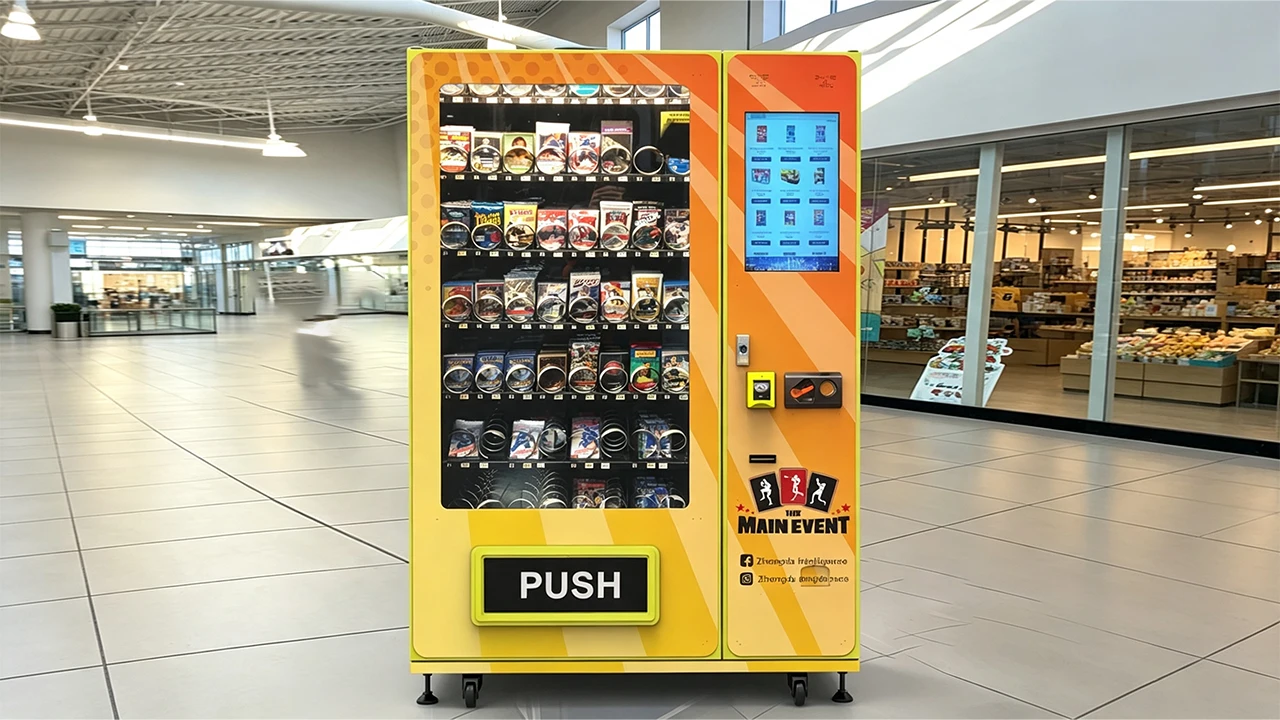
A rendering cannot demonstrate dispensing reliability. Request working-machine videos, detailed specifications, physical samples, and a documented acceptance test.
Choosing by Screen Size
A 43-inch display does not compensate for an unreliable lane. Screen size should support the shopping experience, but it should not dominate the engineering decision.
Assuming “Cashless Ready” Means Ready to Process Payments
The machine may contain a mounting opening or communication interface without including a terminal that is commercially deployable with your processor. Confirm the exact hardware and integration.
Ignoring Software Fees
A low machine price can be offset by an expensive mandatory platform subscription. Ask for a three-year and five-year ownership-cost view.
Ignoring Shipping Dimensions
Crate size, total shipment weight, unloading requirements, door clearance, and the final path to the installation point can create unexpected costs. Obtain packed dimensions before arranging logistics.
Ordering Custom Artwork Too Early
Mechanical changes can alter doors, payment-reader openings, ventilation, screens, or service panels. Final artwork should follow final cabinet approval, not precede it.
Using Protected Brand Assets Without Authorization
A machine designed to sell a particular trading card product does not automatically have the right to present itself as an official branded machine. Use your own retail identity unless the required third-party permissions have been obtained.
Failing to Test the Actual Merchandise
This remains one of the most avoidable mistakes. Package dimensions on a spreadsheet tell only part of the story. Send samples and require repeated test vends.
Bottom Line
A search for a Pokémon vending machine for sale can lead to visually similar machines that are commercially very different. The official Pokémon automated retail machines described by Pokémon Center are not currently sold to outside buyers. What independent operators can purchase is commercial trading card vending equipment configured around authentic sealed card products and their own retail operation.
That makes the buying decision more practical than it first appears.
Check the product handling before the graphics. Verify usable capacity before believing a headline number. Identify the exact payment terminal instead of accepting “cashless supported.” Test the remote-management platform with real inventory events. Inspect cabinet security and service access. Qualify the manufacturer. Finally, calculate returns from contribution margin and realistic traffic rather than gross sales alone.
If I had to reduce the entire guide to one rule, I’d recommend buying the machine around the product and operating model, not buying a cabinet first and trying to force the business into it afterward.
Zhongda Smart’s current card-focused models provide several starting configurations, from compact wall-mounted hardware to larger touchscreen and elevator-delivery systems. The right configuration still depends on your package sizes, desired capacity, payment setup, installation conditions, and service plan.
A carefully specified trading card vending machine can function as a compact self-service retail point rather than a novelty machine. That distinction is what makes the investment worth evaluating seriously.
Frequently Asked Questions
Can I buy an official Pokémon vending machine?
According to Pokémon Center’s automated retail FAQ updated on January 26, 2026, its official automated retail machines are owned and operated by The Pokémon Company International, and there are currently no plans to sell them. A commercial buyer can instead purchase an independent trading card vending machine designed to dispense compatible sealed Pokémon TCG products. Independent hardware should not be represented as an officially authorized Pokémon machine unless genuine authorization exists.
Can an independent vending machine sell Pokémon TCG products?
A commercial vending machine can physically sell legitimately sourced sealed trading card products when the operator complies with the applicable product, retail, payment, tax, consumer, trademark, and other legal requirements. Product compatibility does not by itself grant permission to reproduce Pokémon logos, characters, or other protected artwork on the machine. Buyers should verify their inventory sources and any required brand permissions independently.
How much does a Pokémon card vending machine cost?
Price depends on cabinet size, touchscreen, cargo-lane design, payment hardware, delivery system, software, graphics, and order configuration. Zhongda Smart’s current published reference prices include approximately $999 for a wall-mounted card machine, $1,211 for a 32-inch touchscreen configuration, $2,110 for the ZD-CX-22 card machine, and $2,632 for an elevator card-vending configuration. These are reference product-page prices rather than guaranteed final project quotations. Payment hardware, freight, custom options, software, installation, and other expenses can increase total deployed cost.
What dispensing system is best for booster packs?
There is no universal best mechanism. Properly sized spring coils can work well for many packaged boosters and blisters, while pusher or track systems can suit uniform packages. Higher-value boxed merchandise may justify elevator delivery to reduce impact. The most important step is testing representative product samples repeatedly in the exact lane configuration that will be supplied.
Should a trading card vending machine accept contactless payment?
For most modern unattended retail projects, I’d recommend contactless acceptance alongside standard card payment when the selected processor and deployment support it. NAMA’s 2022–2023 industry census reported that 75% of vending machines accepted non-cash payments, and among cashless-enabled machines, 88% supported contactless payment. Confirm the exact terminal model and integration rather than relying on a generic “cashless ready” statement.
How many products should a trading card vending machine hold?
The useful number depends on your sales mix. A machine with hundreds of positions may still run out of the most popular SKU if it has only one facing for that product. Calculate capacity by SKU and estimate days of supply from expected sales. Allocate multiple lanes to high-turnover products and preserve adjustable capacity for new releases and changing package formats.
What should I ask the manufacturer to test before shipment?
Provide real product samples and request repeated vends at full, partial, and nearly empty stock levels. Also test payment approval, declined payments, failed-vend handling, delivery sensing, network interruption, restart recovery, remote inventory updates, door alerts, and basic component replacement. I’d request at least 100 consecutive test vends for each important representative package family as an internal purchasing target, with every failure documented.
How do I calculate vending machine ROI?
Start with monthly sales and subtract product cost, venue expense, payment fees, connectivity, software charges, and a maintenance reserve. Then account for restocking labor, taxes, administration, financing, and other project-specific expenses. Divide the full deployed investment by realistic monthly contribution rather than gross revenue. Run the calculation at low, expected, and high transaction volumes so the project is not dependent on a single optimistic forecast.
Sources
- Pokémon Center Support — Pokémon Automated Retail Vending Machine FAQ. Used to verify the status and ownership of official Pokémon automated retail machines.
- NAMA — 2022–2023 Industry Census. Used for vending-machine cashless and contactless payment statistics.
- PCI Security Standards Council — Secure Technology. Used for payment-device security context and PTS device guidance.
- EMVCo — EMV Contactless Kernel Specification. Used for contactless payment-acceptance context.
Disclaimer
This article is provided for general educational and commercial evaluation purposes only. Published machine specifications and prices can change and should be confirmed in the final quotation and technical agreement before purchase. ROI examples are hypothetical illustrations and do not guarantee sales, profit, or payback. Payment, accessibility, electrical, installation, consumer, tax, privacy, product-distribution, and other requirements vary according to the applicable circumstances and should be reviewed with qualified professionals where necessary.
Pokémon, Pokémon TCG, and related names, logos, characters, and marks are the property of their respective rights holders. References in this article describe product compatibility and market context only and do not imply sponsorship, endorsement, authorization, affiliation, or partnership. Zhongda Smart is presented as an independent vending-machine manufacturer and does not claim ownership of third-party trademarks.