September 16, 2026 is not a routine trading-card release date. Pokémon TCG: 30th Celebration combines a major anniversary, a broad sealed-product lineup, collectible Pikachu artwork, returning cards, and additional product waves scheduled after the first release. For vending operators, that creates an unusual mix of opportunity and operational pressure. A pokemon 30th celebration vending machine needs more than attractive graphics and enough stock on opening day. Product dimensions, delivery method, payment reliability, refill frequency, stock accuracy, customer support, and the economics of every lane all matter. The strongest setup is one that can handle the opening surge without becoming dependent on it, then adapt as Booster Bundles, Mini Tins, decks, and premium collections arrive later. This guide looks at the release from the machine side: what to stock, what to test, what can go wrong, and where operators should spend their attention before September.
Why September 16 Needs Its Own Operating Plan
Pokémon’s official 30th Celebration product showcase lists September 16, 2026 as the launch date for the expansion, with additional products scheduled later in the year. The expansion is built around the 30th anniversary of the Pokémon Trading Card Game, and each announced booster pack is set to contain five foil cards plus one foil Basic Energy card. One of the most visible collection elements is a group of 30 different Pikachu illustrations.
Those details matter to an operator because they encourage several types of buying behavior at the same time. Some customers will want an accessible sealed product. Some will come back because they are collecting different artwork. Others will wait for a particular box, tin, deck, or premium collection. A machine filled as though every buyer wants the same SKU gives up that advantage.
The release calendar also makes it risky to treat September 16 as a one-day event. The official showcase lists later products including Booster Bundles and Mini Tins on October 2, the Espeon ex and Umbreon ex Battle Deck on October 30, and larger premium collections on November 6. Availability can change, so an operator should verify the current official schedule before committing inventory or advertising a date.
From a vending standpoint, that means the cabinet needs room to evolve. A configuration that works well for a compact September product may not be the best configuration for a later premium box. Keeping adjustable product channels or reserving part of the cabinet for a later reset is often more useful than maximizing the opening-day pack count.
The first question is not “How many anniversary products can I put in the machine?” A better question is “How long can this location stay useful after the first rush?” That changes almost every decision that follows.
| Operating phase | Main objective | What deserves attention |
|---|---|---|
| Before launch | Remove mechanical and payment uncertainty | Package fit, delivery testing, pricing, product mapping, network stability |
| September 16 launch | Protect uptime and stock accuracy | Failed vends, payment approvals, stockouts, refill speed |
| First 7–14 days | Learn the real product mix | Sales by SKU, contribution per lane, repeat stockouts, service workload |
| Later product waves | Refresh the machine without rebuilding it | New package sizes, lane changes, larger boxes, premium inventory |
| After the anniversary surge | Keep the location commercially useful | Evergreen sealed TCG products, normalized traffic, route economics |
A pokemon 30th celebration vending machine makes the most sense when it is planned as a flexible retail point rather than a temporary display case. The anniversary creates the reason to visit; the machine still has to earn its space after the excitement settles.
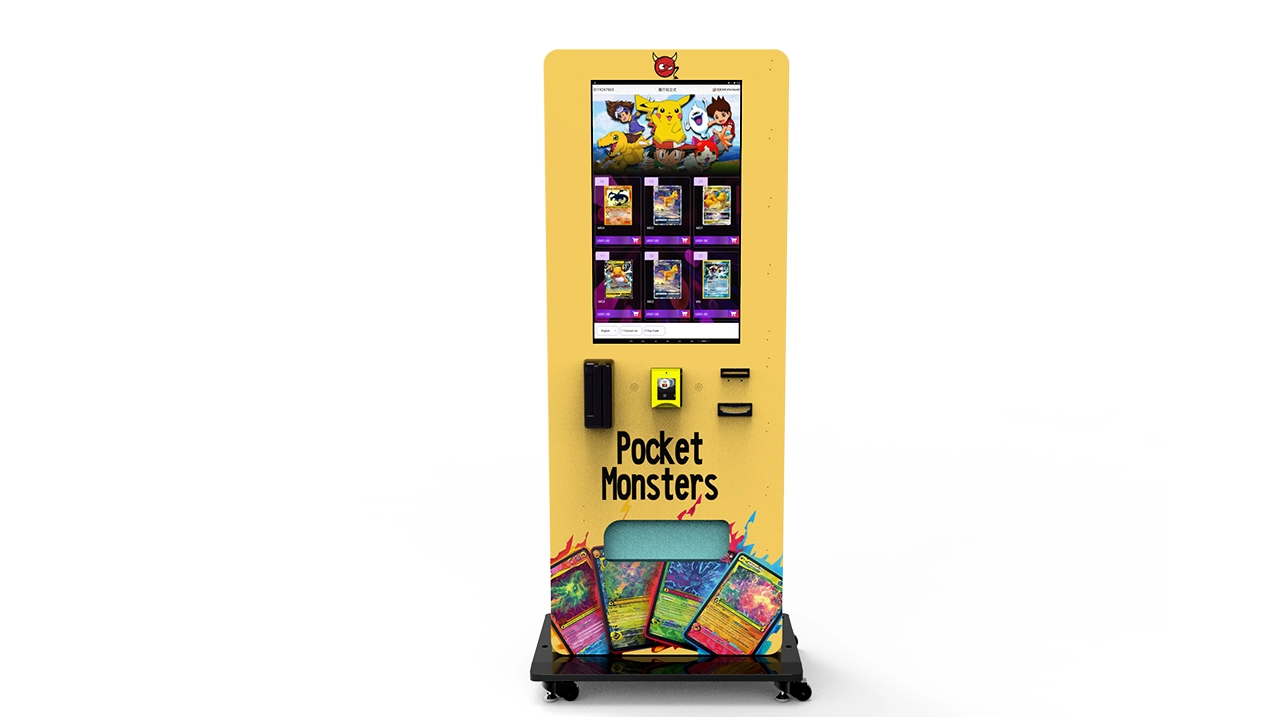
Build the Machine Around the Product Waves
Release calendars are useful, but operators need a second layer of information: what each type of product does to the machine.
A small sealed product can be easy to store in quantity but difficult to control if the lane allows it to rotate. A rigid tin solves the bending problem but can introduce weight and impact concerns. An Elite Trainer Box is easy for a customer to recognize but consumes more cabinet volume. A premium collection can create strong revenue per transaction while tying up much more inventory value and requiring a gentler delivery path.
That is why the assortment should not be built purely by popularity. The physical product and the commercial product are the same SKU, but they create two different questions. Customers ask whether they want it. Operators have to ask whether the machine can sell it consistently without damage, jams, excessive space use, or poor economics.
The following table is a vending-planning framework based on the product formats announced for the 30th Celebration cycle. It is not a claim that every listed product will fit every machine. Final compatibility needs to be checked against the actual package dimensions and the selected vending configuration.
| Product format | Typical vending concern | Delivery approach to evaluate | Operator decision |
|---|---|---|---|
| Compact booster-based collection | Package rotation, edge catching, lane spacing | Standard controlled lane after repeated testing | Good candidate when package movement remains stable at full and low stock |
| Booster Bundle | Box width, stacking behavior, corner condition | Controlled release or soft delivery | Often easier to merchandise than loose-looking formats because the box is clearly recognizable |
| Mini Tin | Rigid surface, added weight, rolling or rotation | Test lane retention and landing impact | Do not assume rigidity automatically makes it easier to vend |
| Elite Trainer Box | Large footprint, corner damage, pickup-door clearance | Elevator or short-drop delivery where necessary | Worth testing when contribution per vend justifies the cabinet space |
| Battle Deck | Box depth, orientation, lane efficiency | Standard or controlled delivery depending on package | Measure the actual package before assigning permanent space |
| Premium Collection | High inventory value, large dimensions, condition sensitivity | Soft or elevator delivery preferred when impact is a concern | Use conservative quantities until demand and service behavior are proven |
The table is intentionally practical. It does not try to predict which product will become the most desirable. That is not necessary for machine planning. An operator can make a sound vending decision without forecasting secondary-market prices or card values.
What matters is whether the machine can keep the product available, correctly represented, and in saleable condition.
There is also a good reason to keep some non-anniversary products in the cabinet. Product supply can tighten around major releases. Pokémon has publicly acknowledged periods of high TCG demand and has stated that it continues to print and reprint products to replenish participating retailers. A machine that depends entirely on one anniversary SKU becomes vulnerable to a supply gap that the operator cannot control.
A mixed assortment gives the location a fallback. If one release sells out, the cabinet can still offer established sealed products instead of displaying an entire screen of unavailable items.
For launch week, a reasonable planning model is to separate the machine into four commercial roles rather than fill every position with the same product.
| Assortment role | Planning range | Purpose |
|---|---|---|
| High-interest launch products | 40–50% | Give customers a clear reason to stop at the machine |
| Higher-contribution sealed formats | 20–25% | Support machine, payment, location, and service costs |
| Reliable everyday TCG products | 20–30% | Keep the cabinet useful when launch inventory is unavailable |
| Test positions | 5–10% | Learn how new package sizes perform without rebuilding the entire machine |
These percentages are not sales forecasts. They are a starting point for an operator who does not yet have location-specific 30th Celebration sales data. Within a few days, the real machine data should replace the planning assumptions.
Which 30th Celebration Product Formats Fit Vending Best?
There is no single answer because a trading card vending machine is a mechanical system, not a universal shelf. The same product can perform well in one cargo layout and poorly in another.
Compact sealed products usually offer the easiest capacity economics. They use less space, refill quickly, and can create more transactions per cabinet. Their weakness is that lightweight packaging can move unpredictably if the lane has too much free space or the product is released at an angle.
Boxed products are usually easier to identify on a touchscreen and can generate more revenue per transaction, but the package itself becomes part of the customer’s expectation. A dented corner on a sealed collectible is more noticeable than a small cosmetic defect on an ordinary vending item.
Tins require a different kind of attention. Their rigid packaging protects the contents, but the machine still has to control weight, movement, and impact. A tin that drops onto another hard package can create noise, dents, or a poor pickup experience even if nothing jams.
Large premium collections demand the most discipline. They occupy valuable cabinet volume and may require a larger delivery opening. They also put more inventory value behind one selection. If a machine is unable to provide a low-impact delivery path, placing a premium box inside simply because it fits can be a poor decision.
For this release cycle, I would not rank product formats by fan excitement. I would rank them by four things:
- how consistently the package travels through the selected lane;
- how much cabinet space one unit consumes;
- how much gross contribution one successful vend creates;
- how much condition risk the delivery path introduces.
That produces a much better assortment than simply loading the most expensive boxes at eye level.
A useful pokemon 30th celebration vending machine should also be honest about what is being sold. Product titles should match the sealed SKU. Images should show the correct product format. If artwork or promotional contents vary, the listing should not imply that a particular version is guaranteed unless it actually is.
That becomes especially important with collectible products because a technically accurate sentence can still create the wrong expectation. “Includes 30th Celebration packs” is different from implying that a specific card or illustration will appear inside. The machine sells sealed merchandise. Randomized card contents remain randomized after the transaction.
The official product lineup gives an operator plenty of merchandising variety without making promises about what a customer will pull. That is the safer and more sustainable approach.
Configure the Machine Around the Package
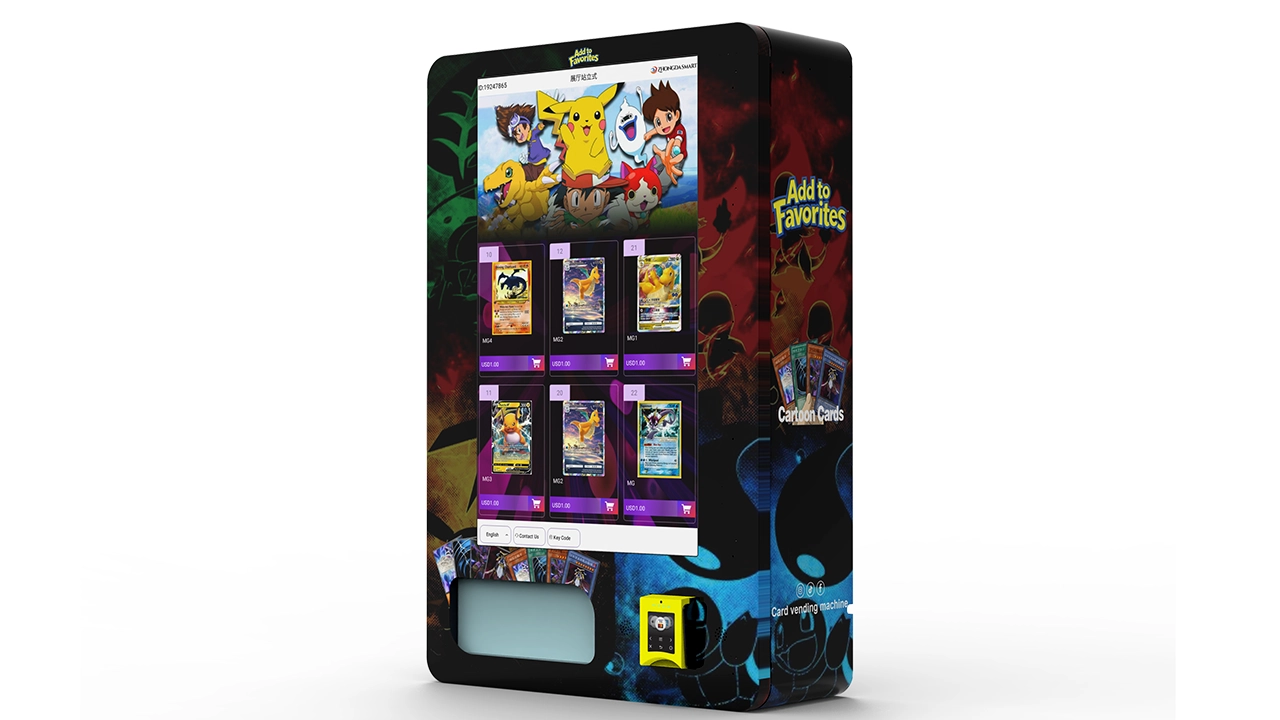
When Zhongda Smart reviews a trading-card vending project, the useful conversation starts with the merchandise. Package width, depth, height, weight, surface material, expected quantity, payment requirements, delivery preference, and installation environment influence the final machine configuration. Lane count by itself is not enough information.
This is one of the reasons a general-purpose snack machine and a card-focused vending machine can look similar from the outside but behave very differently once collectible products are loaded.
A card operator should be able to answer the following before ordering the final machine:
- What are the dimensions of the smallest product?
- What are the dimensions of the largest product planned for the first six months?
- Which packages are flexible and which are rigid?
- Which products can tolerate a normal controlled drop?
- Which products need elevator or soft delivery?
- How many units of each SKU should be available between refill visits?
- Does the pickup opening accommodate the largest planned package comfortably?
- Can product channels be reconfigured when later release waves arrive?
The current Zhongda Smart trading card vending machine range includes configurations with touchscreen interfaces, adjustable product channels, connected management, cashless payment options, and optional elevator delivery. The relevant feature is not the longest specification list. It is whether those functions match the product plan.
For projects built around sealed Pokémon TCG products, Zhongda Smart also publishes a trading card vending machine configuration for Pokémon TCG products. Product compatibility still needs to be confirmed from actual dimensions rather than assumed from the name of the TCG.
Lane count is not the same as useful capacity
Operators often compare machines by the number of channels or shelves. That can be helpful, but only after the product mix is known.
A 60-lane machine does not automatically create 60 equally valuable selling positions. One large box may require space that could otherwise hold several compact products. A product may technically fit a lane but leave too little clearance for reliable movement. Another may fit perfectly but sell too slowly to justify the position.
Useful capacity is the number of saleable units the cabinet can hold while maintaining reliable dispensing and a commercially sensible assortment.
That definition is less impressive on a product brochure, but it is much more useful on a route.
Think about the machine six months after launch
The 30th Celebration cycle makes flexibility particularly important because product formats change over the later waves. If the machine is expected to remain in operation, it should also have a plan for the period after those products are no longer the main traffic driver.
Adjustable channels, reusable digital product positions, configurable pricing, and neutral operator branding can make that transition easier. The same cabinet can then move toward other sealed TCG products, sports cards, compact collectibles, or future releases without requiring a new machine for every campaign.
That is a more durable reason to invest in card-specific hardware than a one-time anniversary graphic.
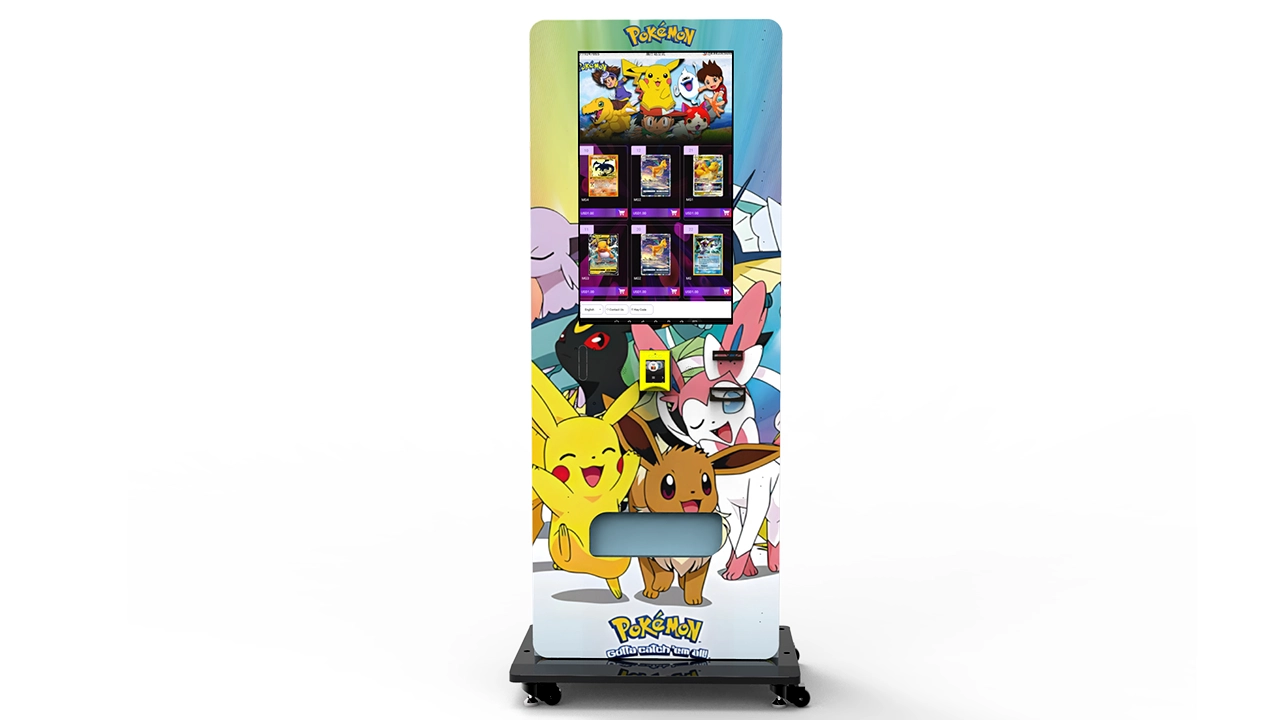
Protect Packaging Before Chasing Maximum Capacity
Collectible packaging is part of the product. A successful vending machine should recognize that.
A box that reaches the pickup area with a crushed corner may still contain perfectly usable cards, but many customers buying sealed TCG merchandise will not view the transaction as successful. That changes the mechanical standard the operator should accept.
Before valuable inventory is loaded, the full product path should be tested from the storage position to the customer pickup area. The relevant question is not whether a package can be dispensed once. It is whether the machine can repeat the vend under realistic conditions.
At minimum, test the product when the channel is full, approximately half full, and nearly empty. Product pressure and movement can change as inventory falls. A package that stays square when supported by several units behind it may rotate when it becomes the final item in the channel.
The landing area also deserves attention. A controlled release can still end badly if a large box lands against a hard corner or on top of another rigid product.
For condition-sensitive merchandise, the delivery system should be chosen around the product’s acceptable impact. Zhongda Smart’s current card-machine configurations include optional elevator or soft-delivery arrangements for projects where reducing long-drop impact is important.
I would choose that feature based on package behavior, not product price alone. Some inexpensive boxes are surprisingly easy to damage. Some more expensive packages are structurally strong. The test result is more useful than the price tag.
A manufacturer-side product compatibility checklist
| Check | What to look for | Why it matters |
|---|---|---|
| Width clearance | Enough room for movement without excessive side play | Too tight causes friction; too loose allows rotation |
| Depth and center of gravity | Product stays stable during release | Long or top-heavy packages may tip |
| Surface friction | Film, cardboard, plastic, or tin moves consistently | Different surfaces behave differently in the same lane |
| Full-channel test | Product releases correctly under normal loading pressure | High stock can change friction |
| Low-stock test | Final units remain aligned | Many rotation problems appear near empty |
| Delivery impact | No torn film, dented tin, or damaged corners | Customer condition expectations are high |
| Pickup clearance | Customer can remove the product without forcing it | A successful vend is not complete until the item is accessible |
| Vend confirmation | The controller correctly records whether delivery occurred | Inventory and refund accuracy depend on it |
For operators who want to understand what happens inside the cabinet after a customer selects a product, the guide to how a trading card vending machine works breaks the transaction into product identification, payment authorization, inventory control, mechanical dispensing, and delivery confirmation.
That sequence is useful when troubleshooting. If a transaction fails, the operator can identify whether the problem came from product mapping, payment, inventory status, the mechanical lane, or final delivery instead of treating every complaint as “the machine jammed.”
Inventory and Restocking for a High-Demand Release
One of the easiest mistakes during a major release is confusing maximum machine capacity with the right amount of inventory.
Filling every available position can feel safe because it reduces the chance of running out immediately. It also commits more cash before the operator knows which products the location actually wants.
During the first week, a smaller but well-balanced load with faster replenishment often gives better information. It allows the assortment to change before too much inventory is trapped in the wrong SKU.
The simplest operating measure is days of cover:
Days of cover = sellable units currently available ÷ average daily units sold.
If a machine holds 240 units across the launch assortment and sells 40 units per day, it has approximately six days of cover. That does not automatically mean the machine should be visited every six days. The fastest individual SKU may be gone much earlier.
That is why the calculation should be performed by product, not just for the whole cabinet.
| SKU | Units on hand | Average daily sales | Days of cover | Likely action |
|---|---|---|---|---|
| Product A | 60 | 18 | 3.3 | Prioritize on next refill |
| Product B | 48 | 5 | 9.6 | No urgent change |
| Product C | 36 | 2 | 18 | Consider reducing space |
| Everyday TCG SKU | 40 | 6 | 6.7 | Maintain as fallback inventory |
The example is hypothetical, but the decision logic is useful. One product may deserve more space even while the whole machine appears well stocked.
Phantom stock is more expensive during a sought-after release
Phantom stock occurs when the system says a product is available but the customer cannot actually buy it. The cause might be an incorrect refill count, a failed vend, the wrong SKU loaded into the lane, a damaged unit removed without a system adjustment, or a synchronization problem.
For an everyday vending item, a small count error may go unnoticed. For a limited or highly anticipated TCG product, it creates an immediate trust problem. A customer may have come specifically because the screen showed availability.
Every refill should therefore reconcile three pieces of information:
- the quantity the system expected before the door was opened;
- the physical quantity actually found;
- the sales and service adjustments recorded since the previous count.
If those numbers do not agree, the variance should be understood before the machine is simply topped up again.
A small unexplained difference once can be a counting mistake. The same difference in the same lane every visit is evidence.
Separate machine inventory from reserve inventory
Inventory in a stockroom or service vehicle does not prevent a stockout until it reaches the machine. Keep machine stock and reserve stock as separate quantities.
For a pokemon 30th celebration vending machine, I would also reserve a small portion of launch inventory outside the cabinet. That reserve can cover damaged packages, unexpected demand, or a lane change without forcing an emergency purchase at unfavorable terms.
The reserve does not need to be large. Its purpose is operational stability, not speculation.
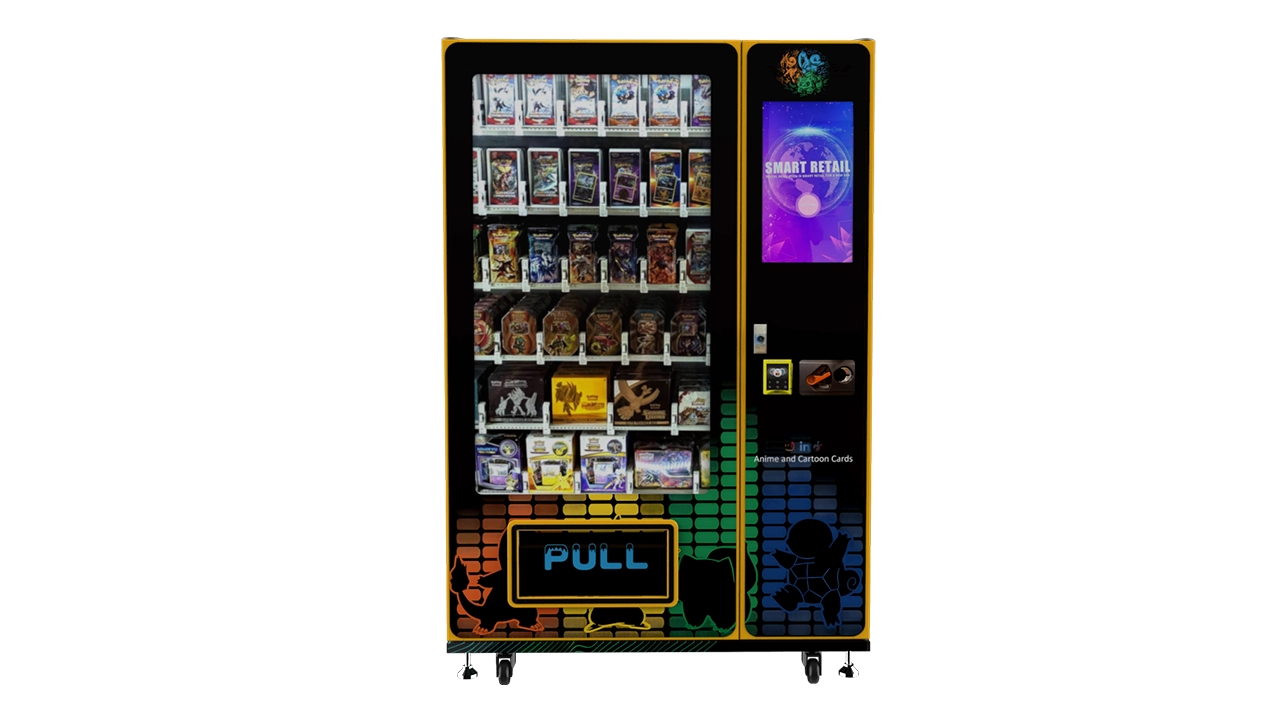
Payment Reliability Matters More Than Another Screen Animation
When a machine is operating unattended, the payment system is part of the storefront.
A slow animation may annoy a customer. A payment reader that cannot complete a transaction loses the sale.
Cantaloupe’s 2026 Micropayment Trends report provides useful context for self-service payment behavior. Its 2025 vending data shows that 78% of vending sales were cashless, up from 73% the year before. It also reports that 85% of cashless vending purchases were contactless. The same dataset lists an average cashless vending ticket of $2.45 compared with $1.57 for cash.
Those ticket values come from broader vending activity and should not be treated as expected trading-card transaction values. A collectible-card purchase has a different price structure. The useful signal is payment behavior: cashless and tap-to-pay are established habits in self-service retail.
A machine selling higher-value sealed cards should therefore treat contactless acceptance as a core operating function rather than an optional upgrade.
Before launch, run real payment tests instead of checking only whether the reader powers on.
- Complete a contactless card transaction.
- Complete a supported mobile-wallet transaction.
- Test chip payment if the configured reader supports it.
- Test a declined transaction and confirm inventory does not change.
- Test the machine after temporary network loss and recovery.
- Verify the amount shown on the product screen matches the amount presented for payment.
- Simulate an approved payment followed by an unsuccessful product delivery.
- Confirm the customer-support process for a transaction that was paid but not completed correctly.
That last scenario deserves particular attention. Operators tend to focus on card declines, but a successful authorization followed by a failed product delivery creates the more difficult customer experience.
The Payment Card Industry Security Standards Council treats unattended payment terminals as a distinct self-service payment environment. Operators should confirm that the payment terminal, processor arrangement, installation, and operating procedures meet the requirements applicable to their deployment.
The vending-machine manufacturer can integrate supported payment hardware, but that does not remove the operator’s responsibility to choose an appropriate payment provider and maintain a compliant setup.
During the launch, monitor authorization success rate separately from sales. A sudden reduction in transactions may be a demand problem, a stock problem, or a payment problem. Without separate data, the three can look identical from the revenue report.
Pricing, Margin, and a Realistic ROI Model
High demand does not automatically make a vending location profitable.
A machine can sell through inventory quickly and still produce disappointing economics when product cost, payment fees, venue share, refill labor, shrink allowance, software charges, and machine cost are included.
For that reason, the number I would watch is contribution per successful vend rather than markup percentage alone.
Contribution per vend = selling price − product cost − payment cost − location cost allocation − variable service cost − expected loss or damage allowance.
The calculation can be kept simple at first, as long as the expensive items are not left out.
Consider a hypothetical sealed product sold for $12.00:
| Example cost | Amount |
|---|---|
| Selling price | $12.00 |
| Product acquisition cost | -$7.20 |
| Payment and transaction cost | -$0.55 |
| Location allocation | -$0.90 |
| Refill and variable service allocation | -$0.45 |
| Damage / shrink allowance | -$0.20 |
| Contribution per vend | $2.70 |
The numbers above are only an example. Replace every figure with the actual project costs before making an investment decision.
If that product sells 30 units per day, it produces $81 per day of contribution before fixed equipment expenses, financing, insurance, fixed software charges, business overhead, and taxes.
That number can then be compared with the cost of keeping the machine at the location.
Why contribution per lane can be more useful than sales per lane
Imagine two products.
Product A sells 20 units per day and produces $1.50 contribution per vend. Product B sells 11 units per day and produces $3.25 contribution per vend.
Product A creates $30 of daily contribution. Product B creates $35.75.
If both require the same cabinet space and service effort, Product B is the stronger position even though it looks slower on the unit-sales report.
That is the kind of comparison a vending operator needs to make once the opening rush has produced enough data.
Do not annualize launch weekend
The first few days of a major anniversary release can produce unusual traffic. Those transactions are valuable, but they are not a normal annual sales rate.
A simple payback calculation should use normalized contribution:
Simple payback period = total installed project cost ÷ normalized monthly contribution available for fixed-cost recovery.
Suppose the complete installed project costs $6,500 and, after the first surge, the location generates $1,050 per month after variable product, payment, venue, and service costs. Simple payback is a little over six months before financing costs, tax, general overhead, unexpected repairs, and the operator’s required return.
That does not mean every pokemon 30th celebration vending machine should target a six-month payback. The example simply shows why revenue alone is not enough to judge a machine.
Operators should also resist pricing decisions driven by online excitement. A transparent margin floor is easier to manage than changing the price every time demand appears to move.
A sensible pricing policy has three parts:
- every product must clear a minimum contribution requirement;
- the customer sees the final selling price clearly before payment;
- price changes are controlled by an authorized person and recorded.
The machine should never suggest that a sealed product is an investment or that the buyer will recover the purchase price through the cards inside. The operator is selling sealed merchandise, not a financial outcome.
Merchandising Without Turning the Machine Into a Billboard
Collectible products already have visual appeal. The touchscreen does not need to compete with them.
The best product page answers four questions immediately:
- What is the product?
- What exactly is included at the sealed-product level?
- How much does it cost?
- Is it currently available?
A clear product image, accurate name, final price, and visible stock status usually do more for the transaction than a long animation or promotional paragraph.
Where contents vary, say so. If one product position can dispense more than one artwork or variation, make that clear before payment. Do not use a single desirable image in a way that implies the customer is selecting that exact variation when the actual vend is random.
The same principle applies to pack contents. Describing an official product accurately is useful. Suggesting that a particular rare card is likely or guaranteed is not.
For the anniversary release, there is enough legitimate information to merchandise the products without exaggeration. The 30th Celebration theme, announced foil-card format, Pikachu illustrations, and different sealed collections already give customers reasons to look more closely.
A pokemon 30th celebration vending machine also does not need to copy official Pokémon Automated Retail branding to be understandable. In fact, an independent operator should make the distinction clear.
Use the operator’s own cabinet branding unless the necessary rights have been obtained. Product listings can factually identify authentic sealed products being sold, but machine graphics, logos, character artwork, and other protected brand assets should only be used with appropriate authorization.
This protects the operator and avoids confusing customers about who owns or operates the machine.
Use images as evidence, not decoration
Machine photos are more useful when they explain a feature.
A photograph of adjustable cargo channels can sit next to the section explaining package fit. An elevator-delivery image belongs next to the discussion of premium boxes. A remote-management screen belongs next to inventory reconciliation.
That gives every image a reason to exist and makes the article more useful to a buyer comparing actual machine configurations.
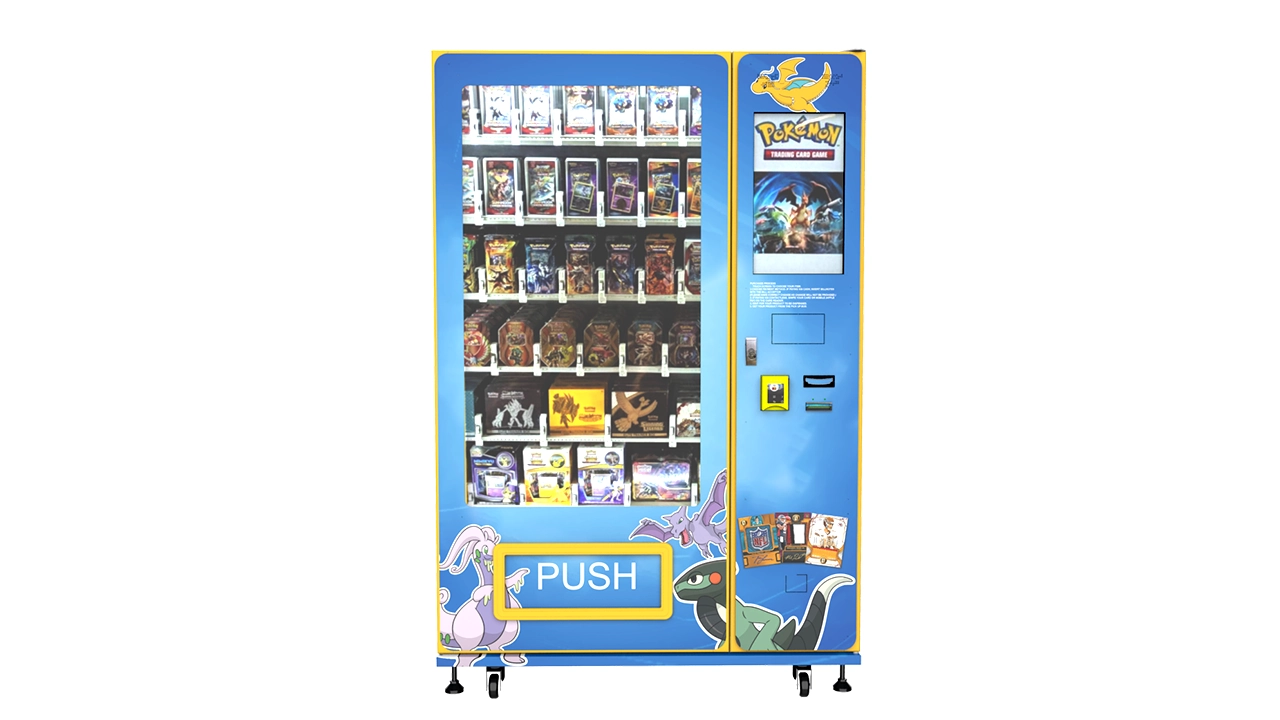
Security, Support, and Customer Trust
Collectible-card vending can place more inventory value inside one cabinet than conventional low-price vending. Security should therefore be treated as part of the machine design, not as a feature added after the location has a problem.
The basics are straightforward:
- secure cabinet construction;
- controlled access to service doors;
- appropriate anchoring or installation where required;
- payment-reader inspection;
- camera coverage where legally permitted and commercially appropriate;
- remote status and fault alerts;
- inventory reconciliation;
- managed keys, passwords, and service credentials.
The pickup area deserves special attention. It must be easy for a paying customer to use while still making unauthorized access to stored inventory difficult.
Payment-terminal inspection should be part of the refill routine as well. A route employee does not need to be a payment-security engineer, but should know what the approved reader, bezel, cables, and seals normally look like. Unexpected attachments, loose housings, altered seals, or unexplained device changes should be treated as a reason to stop and investigate.
Customer support belongs on the machine
Unattended retail still needs an accountable operator.
A customer who has paid but not received the selected product should not have to search the internet to work out who owns the cabinet. Place a support method and machine identifier where it can be found quickly.
A useful support report includes:
- machine identifier;
- approximate transaction time;
- product selected;
- amount charged;
- what the customer received, if anything;
- a photo of a damaged sealed product when condition is the issue.
The operator does not need the customer to send sensitive payment-card details.
Support policies should also distinguish among different problems. A failed vend is not the same as a damaged package. A damaged package is not the same as a customer who opened a randomized TCG product and did not receive a desired card.
Those situations may have different remedies under the operator’s policy and applicable consumer rules.
What matters is that the policy is understandable and applied consistently.
A Practical Pre-Launch Timeline
The technical work should be finished before the anniversary inventory becomes the test material.
A 30-day preparation schedule gives enough time to identify most configuration problems without turning the final week into an emergency.
30–21 days before launch: lock the product and machine assumptions
Start by listing the exact sealed formats planned for the first load. Record package dimensions and approximate weight. Confirm which positions are intended for compact products and which may need to accommodate larger boxes later.
At this stage, settle the major hardware choices:
- cabinet configuration;
- product-channel layout;
- standard versus elevator delivery;
- touchscreen and product-display structure;
- network connection;
- cashless payment equipment;
- remote-management access.
This is also the right point to check cabinet branding and make sure the operator is not relying on third-party intellectual property it does not have permission to use.
20–14 days before launch: test the real purchase path
Run transactions from the same side of the machine the customer will use.
Select the product, pay, receive it, inspect the package, and compare the physical result with the system record.
Repeat the test with several channels. Repeat it when the lane is full. Repeat it with only one or two units left. If a product behaves differently at low stock, find that out now.
Test a sold-out position and confirm that it cannot accidentally accept payment. Test network interruption. Test the support information shown on the screen or cabinet.
A machine should not enter September with a known issue that has been temporarily dismissed because “it usually works.” High transaction volume exposes marginal problems quickly.
13–7 days before launch: design the refill route
Decide how the machine will be serviced before there is anything urgent to service.
Create a lane map with product name, position, selling price, target quantity, and refill trigger. Prepare reserve inventory. Assign responsibility for price changes, inventory adjustments, and fault clearing.
If several machines are being launched, standardize the layouts where possible. A service person should not have to relearn the product map at every location.
Set launch-week alert thresholds. A high-interest product may deserve a refill alert well before the lane is empty.
6–2 days before launch: stage the system, not just the stock
Load product images and final names. Check prices. Confirm remote login access. Verify the payment account. Make sure the support contact is correct.
Prepare basic service items such as approved spare parts, cleaning materials, tools, and any consumables used by the selected configuration.
Do not make the final days a search for missing passwords or payment credentials.
One day before launch: perform the final physical check
Clean the touchscreen, payment reader, pickup area, glass, and visible cabinet surfaces.
Reconcile physical inventory with the system. Complete a paid test transaction. Check that the correct item appears in the correct digital position. Confirm network status and remote monitoring.
Then stop making unnecessary changes.
Launch eve is not the ideal time to redesign the menu or experiment with an untested lane setting.
Launch day: watch exceptions
Revenue will be interesting, but exceptions are more actionable.
Watch:
- payment authorization failures;
- repeated failed vends;
- fast stockouts;
- inventory mismatches;
- customer-support contacts;
- unusually long transaction times;
- unexpected package damage.
If a single product lane fails repeatedly, remove that selection from sale until the cause is understood. A visible sold-out message costs less than repeatedly charging customers for a product that cannot be delivered reliably.
What to Ask a Trading Card Vending Machine Manufacturer
A manufacturer should be able to discuss the merchandise, not only the cabinet.
For an anniversary release with several product formats, I would ask about six areas: product compatibility, delivery, payments, connected management, customization, and after-sales support.
The conversation should become specific quickly.
- What package dimensions can the proposed channel handle? Ask for a practical range and whether the lane can be adjusted.
- Can representative product samples be checked before final configuration? Actual packaging is more useful than assumptions.
- Which products should use elevator delivery? The answer should depend on dimensions and handling risk.
- How is successful delivery confirmed? This affects refunds and inventory accuracy.
- Which cashless payment devices can be integrated? Confirm this before production, not after the machine arrives.
- What can be managed remotely? At minimum, ask about sales, product prices, inventory, machine status, and fault information.
- Can the touchscreen language and product interface be configured?
- Which parts should the operator keep locally?
- What warranty applies to the final ordered configuration?
- What information does technical support need when diagnosing a fault?
Where Zhongda Smart fits
Zhongda Smart is a manufacturer of intelligent vending machines and smart retail equipment founded in 2018. Its current company information lists a 20,000 m² manufacturing facility, more than 400 employees, over 10 R&D engineers, and annual production capacity of approximately 10,000 vending machines.
For trading-card projects, the more relevant point is how that manufacturing capacity is applied. Zhongda Smart’s current card-vending workflow starts with the products the operator plans to sell. Product dimensions, required capacity, payment hardware, cargo-channel layout, delivery method, touchscreen configuration, branding, and remote-management requirements can be reviewed before the final machine specification is confirmed.
Current card-focused configurations include adjustable product channels, touchscreen merchandising, 4G or Wi-Fi connectivity, cashless payment options, remote sales and inventory management, OEM/ODM cabinet customization, and optional soft or elevator delivery for products that benefit from a shorter drop.
That does not mean one standard Zhongda Smart machine is automatically correct for every 30th Celebration product. The stronger buying process is the opposite: provide the intended sealed products or accurate package information first, then choose the machine configuration.
This product-first approach is particularly useful for a pokemon 30th celebration vending machine because the release cycle includes several package types rather than one uniform booster format.
Operators considering a pilot can also use the first machine to prove product fit, payments, location demand, and refill workload before scaling to a larger route. That is usually more valuable than ordering a large quantity based only on projected launch traffic.
After delivery, service terms still matter. Zhongda Smart publishes information about remote technical assistance, replacement-parts support, and current warranty arrangements on its after-sales service and warranty page. Final warranty and support terms should always follow the machine model, confirmed configuration, quotation, and sales agreement.
Do not confuse machine customization with brand licensing
OEM/ODM customization can change cabinet color, graphics, touchscreen elements, language, hardware configuration, and other machine details. It does not grant the operator rights to third-party trademarks, characters, logos, card artwork, or official vending-machine branding.
Pokémon Center’s own support information states that official Pokémon Automated Retail machines are owned and operated by The Pokémon Company International and are not sold to independent operators.
An independently operated card machine should therefore be presented as exactly that.
This distinction also improves customer trust. Buyers can understand that they are purchasing authentic sealed products through an independent retail channel without being led to believe that the cabinet itself is an official Pokémon-operated vending machine.
What to Measure After September 16
The first week produces more useful information than almost any pre-launch forecast.
Do not waste it by looking only at total revenue.
The following ten metrics create a much clearer picture:
| Metric | What it tells the operator |
|---|---|
| Transactions per day | How often customers complete a purchase |
| Revenue per day | Top-line sales movement |
| Contribution per day | Whether those sales are commercially useful |
| Sell-through by SKU | Which products actually deserve cabinet space |
| Contribution per lane | Which positions generate the most useful return |
| Stockout hours | How long the machine loses sales because a desired SKU is unavailable |
| Payment authorization success | Whether payment friction is suppressing transactions |
| Failed-vend rate | Whether a product or lane has a reliability problem |
| Inventory variance | Whether the system and physical machine agree |
| Service minutes per visit | Whether refill and maintenance labor remain economical |
Days 1–3: protect uptime
The first three days are not the time for aggressive optimization. Keep the machine functioning, refill genuine stockouts, resolve payment or delivery problems, and collect clean data.
If customers are waiting, avoid rebuilding the assortment in front of them unless a mechanical issue requires it.
Days 4–10: allow the assortment to respond
By the end of the first week, clear differences usually begin to appear. Some products will move quickly. Others will consume space without producing enough transactions or contribution.
Shift positions gradually. Do not react to one unusual afternoon.
A slower product may still be useful if it produces strong contribution or gives customers a choice that increases total machine conversion.
Days 11–30: normalize the route
Launch-week emergency visits should not become the permanent service model.
Once demand is clearer, adjust refill thresholds so the machine stays available without unnecessary travel. Record how long an average visit takes and which tasks create delays.
The machine should become easier to operate as the month progresses.
Prepare for the next wave before it arrives
Later 30th Celebration products give the operator another opportunity to refresh the cabinet, but every new package should go through the same fit check.
Do not assume that a Mini Tin, Battle Deck, or premium collection belongs in the same position simply because it carries the same anniversary branding.
Measure it. Check the channel. Test the delivery. Check the pickup opening. Review the contribution per unit of cabinet space.
Sometimes the correct answer is not to sell a particular premium product through the machine.
A large collection can be attractive to customers while still being inefficient in a given cabinet. If one box uses the physical space of several faster products and requires more service attention, another retail channel may be more appropriate.
The machine does not need to sell every 30th Celebration product to be a successful anniversary vending program.
When should an operator add another machine?
Expand after the first location proves three things:
- the machine produces positive contribution after realistic operating costs;
- the route can keep profitable products in stock without constant emergency visits;
- payment and product-delivery reliability remain acceptable as volume grows.
A second machine multiplies both strengths and weaknesses. If the first location has poor inventory discipline, unreliable payments, or a product-handling problem, scaling simply creates more places where the same problem can occur.
If the first cabinet operates cleanly, however, the anniversary campaign can become a useful pilot for a broader unattended trading-card retail route.
The Strongest Long-Term Strategy Is Bigger Than One Anniversary
The 30th Celebration gives operators an unusually strong reason to prepare, but the hardware decision should last longer than the campaign.
A machine that can only justify itself during a major release is a fragile investment. A machine that uses the release to acquire attention and then transitions into an everyday sealed-card assortment has a better commercial foundation.
That means the permanent value is not the anniversary artwork on the screen. It is:
- adjustable storage;
- reliable card-friendly delivery;
- remote inventory visibility;
- cashless payment;
- controlled access;
- simple product updates;
- repeatable refill procedures;
- service support;
- the ability to reconfigure the cabinet for future sealed products.
That is the standard I would use when comparing any trading card vending machine for September 2026.
The anniversary can create traffic. Good vending engineering is what converts that traffic into repeatable retail.
Frequently Asked Questions
When does Pokémon TCG: 30th Celebration launch?
Pokémon’s official product showcase lists September 16, 2026 as the launch date for Pokémon TCG: 30th Celebration. Additional products are scheduled later in the year, including announced releases in October and November. Operators should verify the latest official product information before advertising availability because schedules can change.
Is an independent pokemon 30th celebration vending machine the same as an official Pokémon vending machine?
No. Pokémon Center states that its official Pokémon Automated Retail machines are owned and operated by The Pokémon Company International and are not offered for sale to independent operators. This guide discusses independently operated trading card vending equipment that can be configured to sell authentic sealed TCG merchandise.
Can a trading card vending machine sell 30th Celebration products?
Yes, when the specific sealed product fits the selected cargo channel, delivery system, and pickup area. Compatibility should be confirmed from actual package dimensions. Compact products, tins, Elite Trainer Boxes, decks, and premium collections can require different mechanical configurations.
What type of vending machine is best for Pokémon TCG sealed products?
A card-focused machine with adjustable product channels, reliable delivery confirmation, cashless payment, remote inventory management, and an appropriate delivery system is a strong starting point. For larger or condition-sensitive boxes, soft or elevator delivery may be preferable to a long uncontrolled drop.
How much inventory should be loaded for launch day?
There is no universal quantity. Start with expected daily sales, refill frequency, product cost, lane capacity, and available reserve stock. Track days of cover by SKU rather than judging only the total number of units inside the machine. During the first week, more frequent controlled refills can be safer than overloading one unproven assortment.
Should the machine accept contactless payments?
Contactless payment is highly relevant to unattended retail. Cantaloupe’s 2026 Micropayment Trends data reports that 78% of vending sales in its 2025 dataset were cashless and that 85% of cashless vending purchases were contactless. Operators should select payment equipment that fits their processor, business requirements, and applicable payment-security standards.
How can operators reduce damaged TCG products?
Measure the package, choose the correct channel spacing, test the product at full and low stock levels, control the delivery path, and verify pickup clearance. Larger or condition-sensitive packages should be evaluated for elevator or soft delivery. A product should not be loaded into customer service simply because one test vend succeeded.
How does Zhongda Smart configure a trading card vending machine?
Zhongda Smart reviews trading-card vending projects around the products an operator plans to sell. Package dimensions, capacity, cargo-channel layout, touchscreen requirements, payment hardware, connectivity, delivery method, branding, and remote-management requirements can be considered before the final machine configuration is confirmed.
Can Zhongda Smart make an official Pokémon vending machine?
Zhongda Smart manufactures and customizes independent trading card vending equipment. Machine customization does not provide rights to Pokémon trademarks, characters, logos, artwork, or official Automated Retail branding. Operators that want to use third-party intellectual property should obtain the necessary authorization from the relevant rights holder.
What numbers should an operator watch after launch?
Useful metrics include transactions per day, contribution per day, sell-through by SKU, contribution per lane, stockout hours, payment authorization success, failed-vend rate, inventory variance, and service time per visit. These numbers show whether strong sales are translating into a reliable and profitable vending operation.
Sources and Editorial Notes
Pokémon official product information: Pokémon TCG: 30th Celebration Product Showcase . Used to verify the announced September 16, 2026 launch and later product waves, as well as publicly announced product contents.
Pokémon Center Support: Pokémon Automated Retail Vending Machines . Used to distinguish official Pokémon Automated Retail machines from independently operated trading card vending equipment.
Cantaloupe: Micropayment Trends Report 2026 . Used for 2025 self-service vending payment data, including the reported cashless share, contactless share of cashless vending sales, and average cashless versus cash vending ticket.
PCI Security Standards Council: PCI Security Standards Council . Referenced for the payment-security context surrounding unattended payment terminals. Operators should confirm the requirements applicable to their payment system and deployment.
Disclaimer
This article is intended for general vending-machine planning, equipment-selection, and business information. Product schedules, availability, sealed-product specifications, payment requirements, taxes, consumer rules, venue requirements, intellectual-property permissions, insurance requirements, and vending-machine specifications may change. Operators should verify current Pokémon TCG product information with official sources and confirm the commercial, legal, payment, and technical requirements that apply to their own project before deploying a machine.
Pokémon, Pokémon Trading Card Game, Pokémon TCG, Pikachu, and related names, characters, logos, product artwork, and trademarks belong to their respective rights holders. Zhongda Smart is an independent vending-machine manufacturer. Nothing in this article states or implies that Zhongda Smart is affiliated with, endorsed by, sponsored by, licensed by, or authorized by The Pokémon Company International or related entities. References to Pokémon TCG products describe potential sealed-merchandise applications for independently operated vending equipment and do not grant permission to use protected third-party intellectual property.
All financial examples in this guide are hypothetical and are included to explain operating calculations. They are not revenue forecasts, investment advice, or guarantees of machine profitability. Actual results depend on product cost, selling price, location, demand, payment fees, service expenses, equipment configuration, inventory availability, and other operating conditions.
Last updated: August 25, 2026